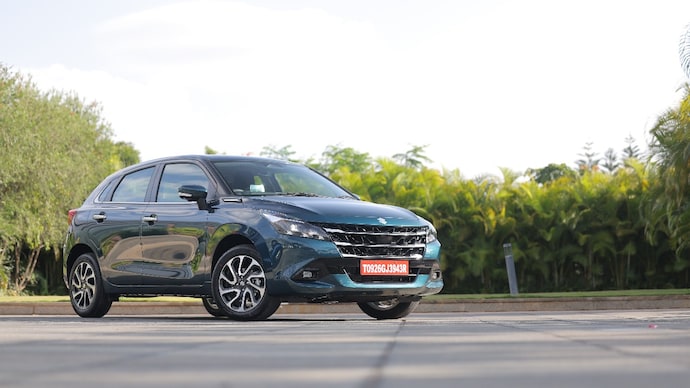

Maruti Suzuki's domestic sales jumped 30% YoY to 1.92 lakh units in September 2026, led by a 62% surge in utility vehicle sales and steady hatchback demand.
Maruti Suzuki September 2026 Sales Jump 30%: Which Models Drove Growth & What It Means for Buyers
Maruti Suzuki India's total domestic sales — including sales to other OEMs — rose 30% year-on-year to 1,91,794 units in September 2026, compared with 1,47,461 units in September 2025. When exports are added, total dispatches reached 2,36,013 units, a 24% increase over the 1,89,665 units recorded in the same month last year. It is one of the strongest single-month performances in the company's history and arrives in a festive season that is clearly firing on all cylinders.
The table below summarises September 2026 performance across Maruti Suzuki's key segments, with year-on-year context and the models that sit inside each bucket.
| Segment | Sep 2026 Units | Sep 2025 Units | YoY Growth | Key Models |
|---|---|---|---|---|
| Domestic Passenger Vehicles (total) | 1,81,838 | 1,32,820 | +37% | All PV models |
| Mini / Compact / Mid-size Cars | 91,887 | 74,090 | +24% | Alto, Swift, WagonR, Baleno, Dzire, Celerio, S-Presso, Ignis, Ciaz |
| Utility Vehicles | 78,911 | 48,695 | +62% | Fronx, Brezza, Grand Vitara, Ertiga, XL6, Invicto, Jimny, Victoris |
| Vans | 11,040 | 10,035 | +10% | Eeco |
| Light Commercial Vehicles (domestic) | 3,414 | 2,891 | +18% | Super Carry |
| Sales to Other OEMs | 6,542 | 11,750 | -44% | — |
| Exports | 44,219 | 42,204 | +5% | Multiple models |
| Total (incl. exports) | 2,36,013 | 1,89,665 | +24% | — |
Source: Maruti Suzuki official press release, October 2026; ETAuto, October 2026
One number deserves particular attention: utility vehicle sales grew 62% — more than double the rate of the overall passenger vehicle segment. That gap tells you almost everything about where Indian buyer preferences are moving right now.
What drove the 62% surge in utility vehicle sales?
Utility vehicle sales encompasses SUVs, crossovers, and multi-purpose vehicles — in Maruti Suzuki's case, the Fronx, Brezza, Grand Vitara, Ertiga, XL6, Invicto, Jimny, and Victoris. The segment delivered 78,911 units in September 2026 against 48,695 units a year earlier — a jump of 30,216 units in a single month.
The Fronx stands out as the standout story. Positioned as a compact SUV coupe in the ₹7.5–13 lakh (ex-showroom) band, it competes directly with the Tata Nexon, Hyundai Venue, and Kia Sonet. Its mild-hybrid petrol and CNG options give buyers running-cost flexibility that rivals cannot always match. The Brezza, Maruti's volume compact SUV, holds ground in the ₹8.3–14.5 lakh range with its 1.5-litre K-series petrol engine and an ARAI-claimed 17.03 km/l — a figure that resonates strongly with value-conscious buyers.
The Grand Vitara offers both strong-hybrid and mild-hybrid petrol variants, pulling buyers who want Toyota-sourced hybrid technology at a Maruti price. Its strong-hybrid variant carries an ARAI claim of 27.97 km/l; real-world numbers typically land in the 22–25 km/l range in mixed driving. No other petrol SUV in its price bracket comes close on paper.
The Victoris adds fresh depth to the UV portfolio, while the Invicto and XL6 serve the MPV buyer seeking captain-seat comfort. For those evaluating 6-seater MPVs with captain seats under ₹25 lakh, both the XL6 and Invicto warrant a close look.
The Jimny, Maruti's 4x4 off-roader, is a niche product that generates strong brand equity. It is a body-on-frame, three-door 4WD SUV — a format with almost no direct rival in India at its price point. For buyers interested in 4-seater off-road SUVs, the Jimny remains the most accessible option.
How did the hatchback and sedan segment perform?
Mini, compact, and mid-size passenger car sales — the segment that includes Alto, Swift, WagonR, Baleno, Celerio, Dzire, Ignis, S-Presso, and Ciaz — grew 24% to 91,887 units from 74,090 units in September 2025. That is solid growth in absolute terms, though it trails the UV segment's 62% surge by a wide margin.
The Swift and WagonR are the workhorses of this cluster. The Swift's fourth-generation model features a 1.2-litre Z-series petrol engine with an ARAI claim of 24.80 km/l. The WagonR, available in both petrol and CNG, remains one of the highest-volume models in the Indian market month after month. Its CNG variant carries an ARAI claim of 34.05 km/kg, making it one of the most economical family hatchbacks available.
The Baleno, Maruti's premium hatchback sold through Nexa dealerships, sits in the ₹6.6–9.9 lakh (ex-showroom) range and competes with the Hyundai i20 and Honda Jazz (discontinued but still in used-car consideration). The Baleno's infotainment system lags the i20's feature richness at comparable price points, but its fuel efficiency (ARAI claim: 22.35 km/l for the 1.2-litre petrol) and Maruti's unmatched service network are genuine advantages.
The Dzire, a sub-4-metre compact sedan built on the same platform as the Swift, has seen renewed interest after its latest generation update. It is a strong choice for buyers wanting boot space and a formal silhouette without crossing the ₹10 lakh mark.
What does the April–September H1 FY27 picture look like?
The September number is not an outlier — it is the culmination of a strong first half. For the April–September 2026 period (H1 FY 2026-27), Maruti Suzuki's total domestic sales including OEM sales stood at 11,46,523 units, up 32% from 8,71,276 units in H1 FY 2025-26.
Domestic passenger vehicle sales during the six months increased 36% to 10,80,240 units from 7,95,446 units. Total sales including exports rose 28% to 13,79,378 units. Exports for the half-year reached 2,32,855 units, up from 2,07,459 units — a 12% increase that reflects growing demand for Maruti-badged vehicles in export markets, primarily in Africa, Latin America, and Southeast Asia.
The Annual Integrated Report 2025-26 shows the company recorded its highest-ever annual sales of 24.22 lakh vehicles and record exports of 4.47 lakh vehicles in FY 2025-26, with momentum carrying into FY 2026-27 at an even stronger pace. MD & CEO Hisashi Takeuchi noted that the company added 5,00,000 units of manufacturing capacity during FY 2026-27 — a supply-side expansion clearly enabling this volume ramp.
Are there any weak spots in the September numbers?
Two numbers cut against the headline optimism.
First, sales to other OEMs — where Maruti supplies vehicles to Toyota for rebadging as the Urban Cruiser Hyryder, Rumion, and Invicto equivalents — fell 44% to 6,542 units from 11,750 units. This is a meaningful drop, though it does not affect Maruti's retail consumer directly. The decline likely reflects inventory normalisation at Toyota's end rather than a structural demand problem, but it is worth watching over the next few months.
Second, export growth was modest at 5% to 44,219 units. In the context of a 30% domestic surge, the export number looks pedestrian. Maruti's export portfolio is heavily weighted toward entry-level models, and currency headwinds in some key markets may be a factor. The H1 export figure of 2,32,855 units does show a healthier 12% growth rate, suggesting September may have been a softer month for exports specifically.
The Maruti stock reacted negatively on the day of the sales announcement — shares fell roughly 4.6–4.9% on BSE and NSE on October 1, 2026 — which is counterintuitive given the strong sales data. Market participants may have been pricing in margin pressure from higher discounts during the festive season, or reacting to the OEM sales decline. Strong retail sales and stock price movements can diverge in the short term.
What does this mean for buyers negotiating a deal right now?
When a manufacturer reports record or near-record monthly sales, the conventional wisdom is that discounts shrink because dealers don't need to push inventory. That logic holds partially here — popular models like the Fronx and Grand Vitara are unlikely to carry significant cash discounts in October 2026 given the strong demand. The festive season does bring exchange bonuses, loyalty benefits, and finance subvention schemes that can effectively reduce the on-road cost even when the sticker price holds firm.
For buyers considering a Maruti model, several practical takeaways emerge:
On waiting periods: A 62% surge in UV sales means production is being stretched. If you are ordering a Grand Vitara strong-hybrid or a Fronx in a popular colour, ask the dealer explicitly about the current waiting period rather than assuming immediate delivery. The 5-lakh-unit capacity addition Maruti announced should help, but supply chain lags are real.
On CNG models: The WagonR CNG, S-Presso CNG, and Fronx CNG are seeing strong demand as fuel prices remain elevated. Waiting periods on CNG variants have historically been longer than petrol equivalents. Budget for a 4–8 week wait if you are set on CNG.
On the Baleno vs rivals: The Baleno's 24% segment growth suggests it is holding its own against the Hyundai i20 and Tata Altroz. The Altroz's 5-star Global NCAP rating is a genuine differentiator for safety-conscious buyers — the Baleno has not been tested under the same protocol. If safety ratings are a priority, that is a real weakness to weigh.
On the Jimny: Low volumes mean dealers sometimes have stock sitting. If you are in the market for a 4-seater off-road SUV, the Jimny may be one of the few Maruti models where negotiation room exists right now.
How does Maruti's September performance compare with the broader industry?
Maruti's 37% domestic PV growth in September 2026 outpaces what analysts had projected for the overall passenger vehicle industry. The India Today report on September 2026 sales confirms the total 2,36,013-unit figure and frames it in the context of a strong festive season start.
Maruti's market share in the passenger vehicle segment has historically hovered around 40–42%. A 37% growth rate in a month where the overall industry is likely growing at a lower rate suggests Maruti is gaining share, not just riding the tide. The UV segment's 62% growth is particularly telling: when Maruti launched the Fronx and Victoris, critics questioned whether the brand could successfully move upmarket. September's numbers suggest it can.
Maruti's average selling price per vehicle remains lower than rivals like Hyundai, Tata, or Kia, because its volume base is anchored in entry and mid segments. The company's ability to sustain margin while growing volume is a question for the quarterly results — the Q4 FY26 financials on Mint showed total revenue of ₹52,462.5 crore and net income of ₹3,659 crore for the March 2026 quarter, with net income actually down 6.45% year-on-year. Revenue growth and profit growth are not always in sync when volumes surge but discounts and input costs also rise.
What is Maruti's longer-term strategy behind these numbers?
The Annual Integrated Report 2025-26 is unusually candid about the company's direction. Chairman R.C. Bhargava projected the Indian car market could grow to 6.1–6.3 million units by FY 2030-31, with the small car segment growing faster than its recent pace. That is a bold call at a time when many analysts are forecasting a shift toward larger, pricier vehicles.
Maruti's multi-powertrain strategy — petrol, CNG, mild-hybrid, and strong-hybrid, with no pure EV in the immediate pipeline for the mass market — is a deliberate hedge against technology uncertainty. The company is betting that CNG and hybrid will serve India's fuel-cost and emissions needs better than battery electric in the near term, particularly outside metro cities where charging infrastructure remains thin.
The green hydrogen plant commissioned at Manesar and the four biogas plants approved by the board signal that Maruti is thinking beyond the current product cycle. Biogas as a substitute for imported CNG is an interesting long-term play — it would reduce fuel import dependence and lower running costs for CNG vehicle owners if the infrastructure scales.
The plan to introduce 7 SUVs over the next 5–6 years means the UV segment's dominance within Maruti's own mix is set to deepen. For buyers, this is good news: more product choices, more competition within the brand's own lineup, and likely more aggressive pricing to protect share against Hyundai, Tata, and Kia.
Which Maruti models should buyers shortlist based on September's data?
The sales data is a useful proxy for what the market is validating. High-volume models tend to have better dealer support, faster parts availability, and stronger resale value — all factors that matter over a 5–7 year ownership cycle.
For hatchback buyers: The Swift and WagonR are the safest bets on after-sales support and resale. The Baleno is the right choice if you want a premium cabin and Nexa experience. Its weakness — relative to the Hyundai i20 — is that the i20 offers a sunroof and a more feature-loaded base variant at a similar price. The Baleno counters with better fuel efficiency and a wider service network.
For compact SUV buyers: The Fronx is the volume leader in Maruti's UV basket and offers a genuine coupe-SUV silhouette that the Brezza does not. The Brezza is the more practical choice if you prioritise boot space and a conventional SUV stance. Neither model offers a diesel option — a real gap for buyers who cover high annual mileage on highways, where a diesel Nexon or Venue can make a stronger running-cost case.
For mid-size SUV buyers: The Grand Vitara strong-hybrid is the most fuel-efficient petrol SUV in its segment by ARAI rating (27.97 km/l, manufacturer claim). Its weakness is the price premium over the mild-hybrid variant and the fact that the strong-hybrid system does not allow aftermarket modifications easily. The Victoris adds a fresh option in the same space. Buyers who want a 7-seat configuration should look at the Ertiga or XL6 — both covered in our best 6-seater MPVs under ₹20 lakh guide.
For MPV buyers: The Invicto, Maruti's rebadged Innova Hycross, sits at the top of the range and competes in a segment where Toyota's original commands fierce loyalty. The Invicto's advantage is Maruti's financing and service network; its disadvantage is that buyers who want the Toyota badge for resale value will pay a premium for the Innova Hycross directly. If running cost is the priority, the 6-seater MPVs with the lowest running cost per km guide breaks this down in detail.
The bottom line for buyers
Maruti Suzuki's September 2026 performance — 30% domestic sales growth, 37% passenger vehicle growth, and a 62% UV surge — is not a statistical blip. It reflects a company that has successfully navigated the shift from hatchback dominance to a more balanced portfolio, while retaining its cost and service-network advantages in the entry and mid segments.
For buyers, the practical implication is straightforward: Maruti products are being validated by the market at scale, which is a reasonable signal for resale value and after-sales support. The weaknesses — no diesel in the compact SUV range, modest export growth, and a stock market that is pricing in margin pressure — are worth acknowledging but do not materially change the ownership calculus for most buyers.
The festive season window through October and November 2026 is the right time to negotiate, compare finance schemes, and lock in exchange bonuses. Whether you are looking at a WagonR CNG for daily commuting or a Grand Vitara strong-hybrid for weekend highway runs, the September sales data suggests you will have plenty of company — and that dealer inventory, while tight on some variants, is being replenished at pace.
Sources
- Maruti Suzuki Reports 30% Surge in Domestic Sales in September 2026, ETAuto
- Maruti Suzuki Sales in September 2026 – Official Press Release
- Maruti Suzuki Annual Integrated Report 2025-26 Press Release
- Maruti Suzuki India Q4 Results 2026 – Mint
- Maruti Suzuki Sells 2.36 Lakh Units in September 2026 – India Today