
Honda Cars India's domestic sales rose 19% year-on-year to 7,609 units in October 2026, led by the updated Elevate SUV amid festive demand.
Honda India October 2026 Sales Jump 19%: Which Models Drove Growth & What It Means for Buyers
Honda Cars India Ltd (HCIL) sold 7,609 units domestically in October 2026, a 19% increase over the 6,394 units it retailed in October 2025 — the sharpest month-on-month recovery the brand has posted in the current financial year. Total sales, including 473 exports, reached 8,082 units. The headline number is strong, but it sits inside a much larger story: Maruti Suzuki simultaneously reported a record 2.16 lakh units in October 2026, illustrating just how competitive the festive-season battlefield is and how much ground Honda still needs to cover to be a volume player rather than a premium-niche one.
How Honda's October 2026 Numbers Stack Up Against Key Rivals
The table below compares Honda's primary models against their closest segment rivals using ex-showroom starting prices, ARAI-claimed fuel efficiency, and key segment context. This snapshot is defined as a point-in-time competitive view based on October 2026 on-sale variants.
| Model | Segment | Ex-Showroom Starting Price | ARAI Fuel Efficiency | October 2026 Context |
|---|---|---|---|---|
| Honda Elevate (updated) | Compact SUV | ₹11.80 lakh* | ~15.0 km/l (petrol, ARAI claim) | Primary growth driver per HCIL VP Kunal Behl |
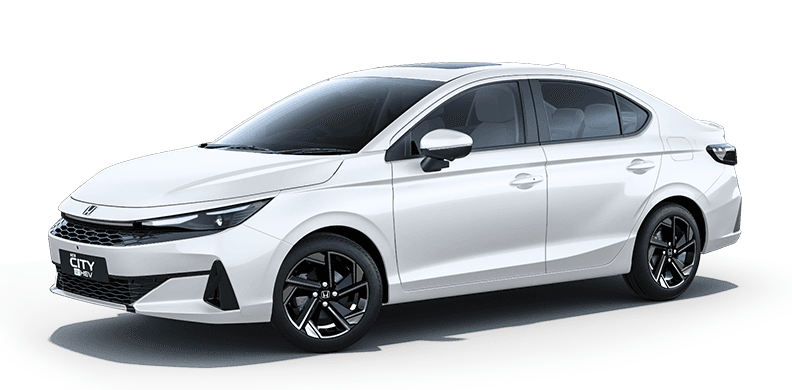
| Honda City (new) | C-segment sedan | ₹11.99 lakh* | ~17.8 km/l (petrol, ARAI claim) | Strong response noted in July 2026 launch cycle |
| Honda Amaze (new, 3rd gen) | Compact sedan | ₹7.65 lakh* | ~18.6 km/l (petrol, ARAI claim) | Consistent volume contributor |
| Maruti Suzuki Grand Vitara | Compact SUV | ₹10.70 lakh (approx., ex-showroom) | 19.38 km/l (mild-hybrid, ARAI claim) | Part of Maruti's record 2.16L October; strong hybrid pull |
| Hyundai Creta | Compact SUV | ₹11.00 lakh (approx., ex-showroom) | ~17.4 km/l (petrol, ARAI claim) | Segment leader by volume in compact SUVs |
Prices sourced from Honda Cars India official website. ARAI figures are manufacturer claims and may differ from real-world usage.
The Grand Vitara's rear seat space is tighter than the Elevate's, and its infotainment system has drawn criticism for laggy response in owner reviews. The Elevate's weakness is equally real: Honda's after-sales network in Tier-2 and Tier-3 cities remains thinner than Maruti's 4,000+ touchpoints, which can affect resale value and service convenience.
What Exactly Drove Honda's 19% Domestic Sales Growth in October 2026?
The Honda Elevate was the primary driver. Kunal Behl, Vice President of Marketing and Sales at Honda Cars India, explicitly attributed the domestic growth to the updated Elevate's styling and features, which received a refresh ahead of the festive season. The timing was deliberate — Honda rolled out the updated model to capture the Navratri-to-Diwali buying window, the period between late September and mid-November when passenger vehicle retail in India historically peaks.
The Elevate competes in the compact SUV segment, defined as SUVs priced broadly between ₹10 lakh and ₹20 lakh with sub-4-metre or near-4-metre body lengths. This is the single most contested segment in Indian passenger vehicles, with the Hyundai Creta, Kia Seltos, Maruti Suzuki Grand Vitara, Toyota Urban Cruiser Hyryder, and Volkswagen Taigun all fighting for the same buyer. Honda's 19% growth in this environment is meaningful, though the absolute volume — roughly 7,600 units across all models — shows the brand remains in the premium-niche category rather than the mass-market tier.
The City and Amaze also contributed. Honda's July 2026 press release noted over 48% domestic sales growth that month, partly driven by the new City launch and the introduction of the Honda ZR-V. By October, those models had settled into their retail rhythm, providing a stable base while the Elevate refresh added incremental demand.
Why Did Total Honda Sales Fall Even as Domestic Numbers Rose?
This nuance deserves attention. While domestic sales rose 19%, total sales — domestic plus exports — fell from 10,518 units in October 2025 to 8,082 units in October 2026, a significant decline driven entirely by a collapse in exports. Exports dropped from 4,124 units in October 2025 to just 473 units in October 2026.
Honda has not publicly explained the export drop in detail. Model-cycle timing, currency and logistics considerations, or a deliberate reallocation of production capacity to meet domestic festive demand could all be factors. Buyers in India are unaffected — if anything, the production focus on domestic supply may have helped Honda manage waiting periods on the Elevate during the peak season.
How Does October 2026 Fit Honda's Broader FY2026-27 Trajectory?
Honda's domestic sales have been on a recovery arc through FY2026-27. The July 2026 data point — 6,014 domestic units, up 48% year-on-year — was the strongest signal of that recovery, driven by the new City launch and ZR-V introduction. October's 7,609 units represent a further step up, and Behl has said the company expects to "sustain positive momentum in the coming months."
That confidence is partly product-driven and partly market-driven. The Indian passenger vehicle market has been on a structural growth path, with festive seasons consistently setting new retail records. Maruti Suzuki's 2.16 lakh units in October 2026 is the most visible proof of that — it is a record for the country's largest carmaker and reflects genuine consumer demand rather than channel stuffing.
For Honda, the challenge is that its portfolio is narrow by Indian mass-market standards. Five models — the Amaze, City, Elevate, ZR-V, and the outgoing second-generation Amaze — serve a market where Maruti alone fields more than a dozen nameplates. The ZR-V, priced at ₹49.99 lakh, is a halo product that adds brand prestige but contributes negligible volume. Growth depends almost entirely on the Elevate and Amaze doing heavy lifting.
What Is the Updated Honda Elevate, and Should You Consider It Now?
The Honda Elevate is Honda's primary compact SUV for India, built on a platform shared with the global HR-V and positioned to compete directly with the Hyundai Creta and Maruti Suzuki Grand Vitara. The October 2026 update brought revised exterior styling — including a reworked front fascia and new alloy wheel designs — along with feature additions to the interior, though Honda has not released a full specification sheet for the refresh as of this writing.
Powertrain options carry over: a 1.5-litre naturally aspirated petrol engine producing approximately 121 PS, paired with either a 6-speed manual or a CVT automatic. There is no diesel option, which is a genuine limitation if you clock high annual mileage. The Grand Vitara offers a strong hybrid (Toyota-sourced) that returns over 27 km/l under ARAI conditions — a figure the Elevate cannot match. The Creta offers a 1.5-litre diesel that suits highway-heavy buyers.
Where the Elevate holds its own: cabin quality is a step above the Grand Vitara's in tactile feel, the rear seat is genuinely spacious for a sub-4-metre-adjacent SUV, and Honda's build reputation — particularly for long-term reliability — remains a strong pull for buyers who keep cars for seven or more years. The ADAS suite on higher variants — lane watch, collision mitigation, adaptive cruise — is more comprehensive than what the Grand Vitara offers at comparable price points.
If you are considering the Elevate now, the post-festive period (November–December) is historically a good time to negotiate, as dealers work to clear festive-season inventory and manufacturers offer year-end benefits. Waiting periods on the refreshed model may still be 4–6 weeks in metro markets; check with your local dealer.
How Does Maruti Suzuki's Record October Affect Honda Buyers?
Maruti Suzuki's 2.16 lakh units in October 2026 is relevant context for any Honda buyer for three reasons.
First, it confirms the market is healthy. When the segment leader posts record numbers, it typically means financing is accessible, consumer confidence is high, and dealers are well-stocked. That environment benefits all brands, including Honda.
Second, it sets the competitive floor. The Grand Vitara — Maruti's entry in the compact SUV space where the Elevate competes — is part of that 2.16 lakh figure. The Grand Vitara's strong hybrid variant uses a Toyota-sourced series-parallel hybrid drivetrain offering ARAI-claimed efficiency of 19.38 km/l for the mild-hybrid and over 27 km/l for the strong hybrid, making it a genuine alternative for efficiency-focused buyers. Honda does not offer a hybrid Elevate in India, which is a product gap the brand has not yet addressed domestically.
Third, Maruti's network advantage is real. With over 4,000 service touchpoints across India, Maruti's after-sales reach is unmatched. Honda's network, while competent in metros and large Tier-2 cities, is thinner in smaller markets. For buyers in cities like Bhilai, Tirupati, or Silchar, this is a practical consideration that affects both service convenience and resale value. If you are in a city where Honda has limited dealer presence, the Grand Vitara may offer a more pragmatic ownership experience even if the Elevate edges it on cabin quality.
What Does Honda's Premium Strategy Mean for Future Model Buyers?
Honda's broader strategic direction in India is becoming clearer. The company's July 2026 ZR-V launch at ₹49.99 lakh signals a deliberate move upmarket, and the new City's positioning at ₹11.99 lakh keeps it in premium-sedan territory rather than chasing volume through price cuts. This is consistent with what Honda's two-wheeler arm, HMSI, has also articulated: a focus on premium products and loyal customers over pure market-share volume.
For car buyers, this strategy has a practical implication: Honda is unlikely to launch a sub-₹8 lakh SUV or a budget hatchback to chase Maruti's volume. The Amaze at ₹7.65 lakh is the brand's most accessible product, and it is a sedan, not an SUV. If you want a Honda and your budget is under ₹10 lakh, the Amaze is your only current option.
The pipeline, however, is interesting. Honda's global product development is accelerating, and the company has signalled that India will get a larger role in product development going forward. Whether that translates into a sub-compact SUV or a hybrid Elevate in the next 24 months is speculative — Honda has made no official announcement — but the brand's trajectory suggests more India-specific products are coming rather than fewer.
Should the October Sales Jump Change Your Buying Decision?
A monthly sales figure is a data point, not a buying recommendation. Here is what October 2026's 19% growth actually tells you as a buyer:
Demand is real, not discounted. Honda attributed the growth to festive sentiment and the Elevate refresh, not to aggressive price cuts or cashback schemes. You are less likely to find deep discounts in the immediate post-festive period, though dealer-level negotiations are always possible.
Waiting periods may persist. Strong October retail often means dealers ran down inventory during the festive rush. If you are buying in November or December 2026, ask your dealer about stock availability before committing to a colour or variant.
Resale value is stable. Consistent sales growth — Honda has now posted positive domestic growth for multiple consecutive months — tends to support resale values. A brand that is growing its India presence is less likely to see the kind of resale erosion that affects low-volume or declining brands.
The export decline does not affect you. The fall from 4,124 to 473 exports is a business story, not a product-quality signal. Indian-market Elevate, City, and Amaze units are manufactured at Honda's Greater Noida and Tapukara plants and are not affected by export allocation decisions.
For safety-conscious buyers evaluating the Elevate against rivals, our guide to 5-star Bharat NCAP SUVs under ₹25 lakh covers the current crash-test space in detail. If you are also considering the Amaze against other compact sedans with strong safety ratings, the 6-airbag hatchbacks under ₹15 lakh guide provides useful cross-segment context.
The Bottom Line: What October 2026 Numbers Actually Mean
Honda Cars India's 19% domestic sales growth in October 2026 is genuine progress for a brand that has spent the better part of three years rebuilding its India portfolio after the Civic and CR-V exits. The Elevate refresh was the right product at the right time, and the festive season provided the demand environment to make it count.
The limitations are equally real. Seven thousand six hundred units in a month where the overall market is at record highs means Honda's share of the passenger vehicle pie remains small. Maruti's 2.16 lakh units in the same month is a reminder of the structural gap between a full-portfolio mass-market player and a premium-niche brand. Honda's lack of a diesel Elevate, absence of a hybrid compact SUV, and thinner Tier-2/3 network are not problems that a festive-season refresh solves.
What the October number does confirm is that Honda's current portfolio — Amaze, City, Elevate — is resonating with buyers who are willing to pay a premium for the brand's build quality and reliability reputation. If that describes you, the post-festive window is a reasonable time to visit a showroom, test the updated Elevate, and negotiate on the variants that suit your budget. Just go in knowing that the Grand Vitara's hybrid efficiency and Maruti's service network are genuine advantages you would be trading away, and decide whether Honda's cabin quality and brand trust are worth that trade for your specific use case.
Sources
- Honda Cars India sales rise 19% to 7,609 units in October, ETAuto
- Honda Cars India registers total sales of 8,284 units in July 2026 — Honda Official Press Release
- Honda Cars India Official Website — Model Prices
- Honda Bets on Premium Scooters, Motorcycles to Win Over India's Young Buyers — Autocar Professional
- Honda to increase focus on premium scooters and motorcycles for India — Autocar India