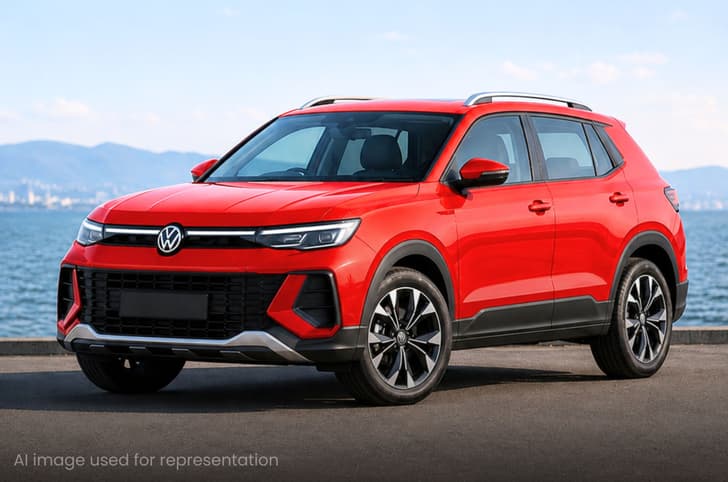

Seven-plus compact SUVs — from Maruti, VW, Renault, Kia, Tata and Mahindra — are set to arrive in India between late 2026 and 2027, intensifying the sub-4m SUV segment war.
5+ New Compact SUVs Launching in India 2026–2027: What Maruti, Volkswagen & Renault Are Bringing to Challenge Fronx & Nexon
India's compact SUV segment — defined as passenger SUVs measuring under four metres in overall length — is about to receive its most disruptive wave of new products since the Tata Nexon first arrived in 2017. At least seven new or heavily refreshed models are confirmed or strongly expected between late 2026 and end-2027, spanning petrol, CNG, hybrid and, as market context, electric powertrains. For buyers currently weighing a Maruti Suzuki Fronx, Tata Nexon, Kia Sonet or Hyundai Venue, the next 12–15 months offer compelling reasons to wait—or equally compelling reasons to buy now and avoid the uncertainty.
The table below maps every confirmed or near-confirmed arrival against the key facts buyers need to compare them at a glance.
| Model | Expected Launch | Platform | Powertrain(s) | Expected Price (ex-showroom) | Key Differentiator |
|---|---|---|---|---|---|
| Maruti Suzuki Fronx Facelift | Early 2027 | Heartect (existing) | Z12E petrol, MT/AMT CNG | Rs 7.5–13 lakh (est.) | ADAS sensor, rear disc brakes, CNG upgrade |
| Volkswagen Tera (compact SUV) | 2027 | MQB-A0-IN | 1.0 TSI petrol (113 bhp), 6MT / 8AT | Rs 8–13 lakh | Badge-engineered Kylaq, European positioning |
| Renault Bridger | Late 2027 | R-GMP | 1.2T petrol, strong hybrid, CNG | Rs 8–14 lakh (est.) | India-first launch, Chennai-made, hybrid option |
| Next-Gen Kia Sonet | 2027 | K1 platform (est.) | Existing petrol/diesel, Level 2 ADAS | Rs 8–16 lakh (est.) | More rear room, larger digital displays |
| Next-Gen Tata Nexon (Garud) | Mid-2027 | Modified X1 arch. | Petrol, diesel, MT/AT | Rs 9–17 lakh (est.) | Full exterior/interior redesign |
| Mahindra Vision S (production) | Early 2027 | NU_IQ monocoque | 1.2T mStallion petrol, 1.5 mHawk diesel | Rs 10–16 lakh (est.) | Above XUV 3XO, targets Syros/Bayon space |
| Hyundai HE1i (compact EV) | By March 2027 | E-GMP (K) | Electric (2 battery options, 450+ km claimed) | Rs 12–18 lakh (est.) | EV — included as market context only |
Prices are estimates based on segment positioning and manufacturer statements. The Hyundai HE1i is an electric vehicle and is included here only as market context; this site's buying guides focus on petrol, diesel, CNG and hybrid powertrains.
What exactly is the compact SUV segment, and why is it exploding right now?
The compact SUV segment is defined as SUV-bodied passenger vehicles with an overall length of under four metres, which in India qualifies them for an 18 percent GST rate rather than the 28 percent applied to longer vehicles. That tax advantage—reinforced by a further GST cut last year—directly lowers the on-road price and makes these models accessible to buyers upgrading from hatchbacks or premium sedans.
The segment's growth has been remarkable. Over 45,000 Skoda Kylaq units were sold in 2025 alone, making it the single biggest contributor to Volkswagen Group's India sales. The Kylaq only launched in late 2024. The Tata Nexon has held the title of India's best-selling compact SUV for several consecutive years, while the Kia Sonet and Hyundai Venue consistently rank in the top-ten monthly sales charts. This volume is precisely why every major carmaker now wants a piece of the action.
The next phase of the compact SUV war will be fought not just on price and fuel economy but on electrification readiness, hybrid efficiency, Level 2 ADAS, connected technology and lifestyle design, according to Autopunditz. That shift is visible in every model listed above.
What is the Maruti Suzuki Fronx facelift, and when will it arrive?
The Maruti Suzuki Fronx facelift is a mid-cycle update to the existing Fronx compact SUV—not a full-generation change—that Maruti Suzuki has begun road-testing ahead of an expected debut in early 2027. Camouflaged prototypes spotted on Indian roads reveal a revised grille design, rear disc brakes (a meaningful upgrade over the current drum setup), and what appears to be an ADAS sensor mounted centrally in the grille.
The powertrain story carries equal weight. The facelift is expected to introduce the Z12E petrol engine—a newer-generation unit—along with MT and AMT options for a CNG variant. Maruti Suzuki has been expanding its CNG lineup aggressively, and bringing CNG to the Fronx would directly address buyers in tier-2 and tier-3 cities where CNG infrastructure is now well-established.
What the Fronx facelift is unlikely to change: the fundamental platform, overall dimensions, or the basic interior architecture. Buyers expecting a dramatically larger cabin or a turbocharged petrol option beyond the existing 1.0 BoosterJet may be disappointed. The current Fronx's rear seat space is a known limitation, and a facelift typically cannot address structural constraints. The Fronx also does not offer a diesel engine—a gap that rivals like the Kia Sonet and next-gen Tata Nexon will continue to exploit.
For buyers comparing the Fronx facelift against incoming rivals, the key advantages remain Maruti's unmatched service network (over 4,000 outlets nationwide), strong resale value and the expected CNG option's running cost advantage. The weaknesses—no diesel, modest rear space, no factory-fitted sunroof on base trims—will persist through the facelift cycle.
Safety deserves separate attention. If the ADAS sensor spotted on test mules is confirmed in production, the Fronx facelift could finally address the segment's growing demand for lane-keep assist, automatic emergency braking and adaptive cruise control—features already standard on the Kia Sonet HTX+ and Hyundai Venue Knight. For safety-rated models currently on sale, our guide to 5-star Bharat NCAP-rated SUVs under Rs 15 lakh is worth reading alongside this article.
What do we know about the Volkswagen compact SUV (Tera) for India?
Volkswagen officially confirmed a compact SUV for India in August 2026, with a 2027 launch target. Thomas Schafer, CEO of Volkswagen Passenger Cars, stated directly: "This model is being developed specifically for India." The project is estimated to cost around Rs 275 crore in development investment and will be manufactured at the Skoda Auto Volkswagen India plant in Chakan, Maharashtra.
The technical foundation is the MQB-A0-IN platform—the same architecture that underpins the Skoda Kylaq. This is not coincidental; the VW compact SUV is essentially a badge-engineered Kylaq with distinct exterior styling, a differentiated interior and a separate variant lineup. In Brazil, Volkswagen already sells a closely related model called the Tera, and that name has been connected to the India product in multiple reports, though no official confirmation has been made.
The powertrain is the 1.0-litre TSI three-cylinder turbocharged petrol producing 113 bhp and 178 Nm—the same unit used in the Kylaq, Taigun and Virtus. What differentiates the VW version is the gearbox: reports indicate it will launch with an 8-speed automatic transmission rather than the 6-speed automatic currently offered on the Kylaq, which would give it a refinement and efficiency edge in city driving. A 6-speed manual will also be offered.
Autocar India expects pricing between Rs 8 lakh and Rs 13 lakh ex-showroom, which would place it in direct competition with the Fronx, Kia Sonet, Hyundai Venue and Tata Nexon. The brand premium Volkswagen commands—and the 8AT gearbox—suggest the sweet spot will be the Rs 10–13 lakh band.
The caveat is straightforward: as a badge-engineered product, the VW compact SUV's mechanical differentiation from the Kylaq will be limited. Buyers who already considered and rejected the Kylaq for reasons of space, diesel availability or boot capacity will find the same limitations here. The VW badge and superior variant equipment may justify the choice for some, but it is not a different vehicle.
What is the Renault Bridger, and why does it matter for India?
The Renault Bridger is an all-new sub-four-metre SUV that Renault previewed through a concept earlier in 2026 and has since confirmed for production, with India as the first launch market. The production model will be manufactured at Renault's Chennai facility for both domestic sales and export, which signals a serious long-term commitment rather than a volume experiment.
The Bridger will ride on Renault's R-GMP (Renault Global Modular Platform) architecture and will slot between the Kiger (currently priced from around Rs 6 lakh) and the Duster in Renault's India lineup. That positioning—roughly Rs 8–14 lakh—puts it squarely against the Fronx, Sonet and Venue.
What makes the Bridger genuinely interesting is its powertrain breadth. Renault has confirmed petrol, hybrid and electric derivatives. For buyers on this site, the strong-hybrid and CNG options are the most relevant. A strong-hybrid compact SUV under Rs 12 lakh would be a segment first—the Grand Vitara's strong hybrid currently starts above Rs 17 lakh in the mid-size segment. If Renault can deliver genuine hybrid efficiency (think 25+ km/l ARAI) at a sub-4m price point, the Bridger could reshape the segment's value calculus.
Autopunditz reports the Bridger will feature a new 1.2-litre three-cylinder turbocharged petrol engine alongside the hybrid and CNG options. The launch timeline is late 2027, which is the furthest out of all the models in this article—meaning buyers face the most uncertainty here.
What is the next-generation Kia Sonet, and how will it differ from today's model?
The second-generation Kia Sonet is expected to reach Indian showrooms in 2027, based on test mule sightings reported by Gaadiwaadi, though Kia has made no official announcement. The replacement is expected to use the K1 platform, which should allow for more generous rear passenger space—one of the most consistent criticisms of the current Sonet despite its otherwise premium positioning.
The cabin is expected to receive larger digital displays and a redesigned dashboard, likely drawing from the Kia Syros's interior approach. A more advanced Level 2 ADAS suite is anticipated, which would maintain the Sonet's edge over the Fronx (which currently lacks ADAS) and match the Venue's feature set.
What is not expected to change significantly: the powertrain lineup. The existing 1.0-litre turbocharged petrol (120 bhp), 1.5-litre naturally aspirated petrol and 1.5-litre diesel are likely to carry over with incremental updates. The Sonet's diesel variant is a genuine differentiator in the segment—the Fronx and VW Tera offer no diesel—and Kia is unlikely to abandon it given strong demand from highway-heavy buyers.
The current Sonet's weaknesses—tight rear headroom, a somewhat small boot at 385 litres, and pricing that creeps above Rs 15 lakh for top trims—are the targets the next-gen model needs to address. Whether the K1 platform delivers meaningfully more interior space within the sub-4m constraint will be the defining question.
What is the next-generation Tata Nexon (Garud codename), and should you wait for it?
The next-generation Tata Nexon, reportedly assigned the internal codename Garud, is expected to reach showrooms in mid-2027. Tata Motors is expected to underpin it with a heavily modified version of its X1 architecture, with major structural revisions, a completely redesigned exterior and an entirely new cabin.
The current Nexon—which first launched in 2017 and received significant updates in 2020 and 2023—has been India's compact SUV sales leader for much of its life. A full-generation change is overdue, and the Garud codename suggests Tata is treating this as a ground-up effort rather than another facelift cycle.
The existing petrol and diesel powertrain choices are expected to continue, with both manual and automatic transmissions. Tata has also been developing CNG variants across its lineup, so a CNG option on the next Nexon is plausible. The safety story will be critical: the current Nexon holds a 5-star Global NCAP rating, and Tata will need to maintain or improve that for the next generation to defend its safety-first positioning. Our guide to 5-star Bharat NCAP SUVs under Rs 25 lakh provides useful context on what these ratings cover.
Should you wait? If you are buying a Nexon today, the current 2023-updated model is a mature, well-sorted product. Mid-2027 is 18+ months away, and a lot can change. If your current vehicle is serviceable, waiting makes sense. If you need a car now, the current Nexon remains one of the segment's strongest all-round choices.
What is the Mahindra Vision S production SUV, and where does it fit?
The Mahindra Vision S production SUV is the road-going version of Mahindra's Vision S concept, expected in early 2027. It will be the first model to use Mahindra's new NU_IQ monocoque architecture—a platform distinct from the XUV 3XO's underpinnings—and will slot above the XUV 3XO in Mahindra's lineup.
The positioning matters. Rather than competing head-on with the Fronx and Venue at Rs 8–12 lakh, the Vision S production model is expected to target the Kia Syros and Hyundai Bayon space—roughly Rs 10–16 lakh—with an upright, squared-off stance and a tailgate-mounted spare wheel that gives it a distinct lifestyle identity.
Autopunditz reports the powertrain options will include a 1.2-litre mStallion turbocharged petrol and a 1.5-litre mHawk diesel, both of which are proven units from Mahindra's existing lineup. A rear independent suspension setup is also rumoured, which would be a genuine segment differentiator for ride quality on broken roads.
Mahindra's challenge is differentiation. The XUV 3XO is already a strong compact SUV, and the Vision S production model needs to justify its premium over it while competing against the Syros's feature-rich cabin. The NU_IQ platform's newness is an unknown—first-generation platforms sometimes carry early-production quality concerns that take a model year to iron out.
How does the Hyundai HE1i fit into this picture for petrol/hybrid buyers?
The Hyundai HE1i is an electric compact SUV—a born-electric vehicle built on the E-GMP (K) platform—and is therefore outside the primary scope of this buying guide. Hyundai has confirmed an India debut by March 2027, with manufacturing at its Sriperumbudur facility in Tamil Nadu and Exide-sourced localised batteries. Two battery pack options are planned with a claimed range exceeding 450 km.
For petrol and hybrid buyers, the HE1i's relevance is indirect: its arrival will intensify competition across the segment, prompting Hyundai to sharpen pricing or features on its petrol Venue lineup. The HE1i will compete with the Tata Nexon EV and Mahindra XUV 3XO EV—not with the Fronx or VW Tera—so its direct impact on the petrol/CNG/hybrid buyer's decision is limited.
Which of these should a compact SUV buyer in India actually wait for?
This depends entirely on your use case, timeline and risk tolerance. Here is a framework:
Buy now (current models) if you need a car within the next six months, your current vehicle is failing, or you want a mature, well-debugged product with established service support. The current Maruti Fronx, Tata Nexon, Kia Sonet and Hyundai Venue are all strong choices with no major unresolved quality concerns.
Wait for the Fronx facelift if you are already leaning toward a Fronx and can hold out until early 2027. The addition of ADAS, rear disc brakes and a CNG option meaningfully improves the value without changing the fundamental character of the car. The risk is low—this is a facelift, not a new platform.
Wait for the VW Tera if you want a European-branded compact SUV with the 8AT gearbox and are comfortable with the Rs 10–13 lakh price band. The Kylaq's track record gives reasonable confidence in the platform's reliability. The caveat: it is still a badge-engineered product, and if you have already driven a Kylaq and found it wanting, the Tera will not fix those issues.
Wait for the Renault Bridger if the hybrid powertrain option is genuinely important to you and you can wait until late 2027. This is the highest-risk wait—latest timeline, newest platform, least confirmed specification detail—but also the highest reward if the strong-hybrid variant delivers on its efficiency promise.
Wait for the next-gen Nexon if you are a Nexon loyalist who wants the full redesign rather than the current model. Mid-2027 is a long wait, and the current Nexon is already a very good car. Only wait if your current situation allows it.
Consider the Mahindra Vision S if you want something visually distinct from the mainstream compact SUV crowd and are comfortable with the slightly higher price point. The NU_IQ platform is new and unproven, which is a legitimate concern for early adopters.
What does this wave of new compact SUVs mean for current prices and discounts?
When multiple new products are confirmed for a segment, incumbent models typically see increased discounts and offers as manufacturers work to clear inventory and maintain market share. This dynamic is already visible: Kia Syros and other compact SUVs were offering significant Diwali discounts in October 2026, and competitive pressure will only intensify as 2027 approaches.
For buyers who decide to purchase now, negotiating a better deal on current-generation models is a reasonable strategy. The Tata Nexon, Kia Sonet and Hyundai Venue in particular may see more aggressive pricing as their next-generation replacements approach. The Fronx, being a Maruti product with strong organic demand, typically carries fewer discounts—but the approaching facelift may create some negotiating room on current variants.
The broader GST context is also relevant. The cut from 28 percent to 18 percent for sub-4m vehicles that meet the required length and engine-size limits has already been factored into current pricing. Any further policy changes would affect the entire segment equally, so this is not a differentiating factor between models.
What safety features should buyers expect from 2027-era compact SUVs?
The 2027 compact SUV generation is defined by a step-change in standard safety equipment. Level 2 ADAS—which includes features such as adaptive cruise control, lane-keep assist, automatic emergency braking and blind-spot monitoring—is expected to be standard or near-standard on most new arrivals. The next-gen Kia Sonet, Hyundai HE1i and Fronx facelift (based on the ADAS sensor spotted on test mules) all point in this direction.
Six airbags are already available on mid-to-upper trims of most current compact SUVs. By 2027, six airbags as standard across all variants is a realistic expectation, driven by Bharat NCAP's scoring methodology and consumer awareness. Our guide to SUVs with 6 airbags under Rs 25 lakh covers the current space in detail.
Bharat NCAP compliance will be a baseline expectation rather than a differentiator. Buyers should look beyond the star rating to the specific scores for adult occupant protection, child occupant protection and safety assist—all three matter for real-world safety outcomes.
The bottom line: Is this the right time to buy a compact SUV in India?
The next 12–18 months represent both the best and most complicated time to buy a compact SUV in India. The best, because the incoming competition will force every manufacturer to sharpen pricing, features and quality. The most complicated, because the sheer number of confirmed and rumoured arrivals makes it genuinely difficult to know whether to buy now or wait.
A few principles help cut through the noise. First, if a model you are considering has a confirmed next-generation replacement within six months, waiting is rational. If the replacement is 12+ months away, the current model's known qualities outweigh the uncertainty of an unannounced product. Second, facelifts (like the Fronx update) carry lower risk than all-new platforms (like the Mahindra Vision S's NU_IQ architecture)—early adopters of new platforms historically absorb more quality teething issues. Third, the VW Tera's MQB-A0-IN platform is already proven through the Kylaq, which reduces the platform-risk concern significantly.
The compact SUV segment is entering its most competitive era. That is unambiguously good news for Indian buyers—whether you buy today or wait for what's coming.
Sources
- 5+ All-New Compact SUVs Arriving Soon In India - Maruti To Volkswagen | Gaadiwaadi
- Volkswagen compact SUV for India officially confirmed for 2027 | Autocar India
- New Hyundai compact electric SUV India debut by March 2027 | Autocar India
- Volkswagen greenlights Kylaq-based compact SUV for India | Team-BHP
- Upcoming Compact SUVs India 2026–2028: Next Big SUV War Under 4 Metres | Autopunditz
- Maruti Suzuki Fronx – Official Page