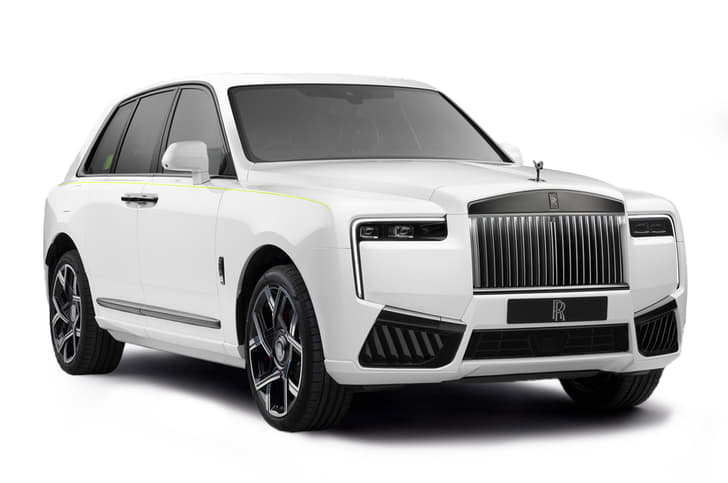

Utility vehicles now account for ~69% of India's passenger vehicle market in FY27, driven by 31% YoY UV growth, festive demand, and a widening SUV product portfolio across all price bands.
Nearly seven out of every ten passenger vehicles sold in India during April–September 2026 carried a utility vehicle or SUV badge, with UVs accounting for approximately 68–69% of total passenger vehicle volumes in FY2026-27 so far — a figure that would have seemed implausible just five years ago, when hatchbacks still dominated Indian showrooms.
The shift is structural, not cyclical. UV volumes grew 31% year-on-year in the April–September 2026 period, compared with 23% growth in conventional cars. In September 2026 alone, UVs registered 26% YoY growth while cars grew 14%, pushing the UV mix to around 69% of that month's passenger vehicle volumes — up from 67% in September 2025. JATO Dynamics data puts total passenger vehicle registrations at 423,400 units in September 2026, a 31% YoY jump, with SUVs alone accounting for 56.5% of all registrations in that month.
To understand what this means for a buyer today, the table below places three of the most consequential SUVs in the market — spanning entry compact, mid-size, and full mid-size segments — side by side, including Maruti Suzuki's own entries in this space.
Key SUV Segment Comparison: Fronx vs Grand Vitara vs Victoris vs Key Rivals
| Model | Segment | Starting Price (ex-showroom) | Engine Options | ARAI Fuel Efficiency | Key Weakness |
|---|---|---|---|---|---|
| Maruti Suzuki Fronx | Compact SUV / crossover | ~₹7.51 lakh | 1.2L NA petrol; 1.0L turbo petrol | Up to 21.79 km/l (ARAI, 1.2L MT) | No diesel; rear space tighter than Nexon/Punch |
| Maruti Suzuki Grand Vitara | Mid-size SUV | ~₹10.70 lakh | 1.5L mild hybrid petrol; 1.5L strong hybrid | Up to 27.97 km/l (ARAI, strong hybrid) | No diesel option; strong hybrid variant commands a significant price premium |
| Maruti Suzuki Victoris | Mid-size SUV (3-row) | ~₹18.99 lakh | 2.0L strong hybrid petrol | ~23 km/l (ARAI, manufacturer claim) | Petrol-only; higher price point vs diesel 3-row rivals; limited off-road ability |
| Hyundai Creta | Mid-size SUV | ~₹11.00 lakh | 1.5L petrol NA; 1.5L turbo petrol; 1.5L diesel | Up to 21.8 km/l (ARAI, diesel) | Turbo petrol variants priced steeply; DCT gearbox reliability concerns |
| Mahindra Scorpio N | Full-size SUV | ~₹13.99 lakh | 2.0L turbo petrol; 2.2L diesel | Up to 16.07 km/l (ARAI, diesel 4x2) | Older platform; ride quality on rough roads can be choppy in lower trims |
| Tata Nexon | Compact SUV | ~₹8.10 lakh | 1.2L turbo petrol; 1.5L diesel | Up to 24.07 km/l (ARAI, diesel) | Interior quality perception gap vs Korean rivals; smaller boot |
All prices are ex-showroom, approximate, and subject to change. Fuel efficiency figures are ARAI claims, not real-world tested numbers.
What exactly is a "utility vehicle" in India's sales data?
A utility vehicle, as defined by India's automotive industry classification used by SIAM and reported by manufacturers, is a broad category that includes compact SUVs, mid-size SUVs, full-size SUVs, crossovers, and multi-purpose vehicles (MPVs). The term encompasses any passenger vehicle with a body style offering higher ground clearance, a raised seating position, or multi-row utility seating — which is why models as different as the Maruti Suzuki Fronx (a crossover hatchback) and the Mahindra Scorpio N (a body-on-frame SUV) both appear in the same UV bucket.
This definitional breadth matters for buyers. When you read that "69% of cars sold are SUVs," that includes everything from the sub-₹8 lakh Tata Punch to the ₹40+ lakh Toyota Fortuner. The common thread is not off-road capability or size — it is the perception of height, presence, and practicality that Indian buyers now associate with the SUV body style.
How fast has the SUV share grown, and is this pace sustainable?
The numbers tell a clear story of acceleration. JM Financial's October 2026 report notes that the UV mix stood at approximately 67% in September 2025 and has since climbed to 69% in September 2026. A year earlier still, the figure was closer to 60%. At this rate of share gain — roughly 2 percentage points per year — the UV segment could account for three-quarters of all passenger vehicle sales within two to three years, though JM Financial itself expects growth rates to moderate in the second half of FY27.
JATO Dynamics' September 2026 data adds important texture: while JM Financial's 69% figure uses the wholesale/dispatch methodology (factory to dealer), JATO's registration data (actual customer purchases) shows SUVs at 56.5% of total registrations. The gap between 56.5% and 69% reflects the fact that the SIAM/JM Financial UV category includes MPVs like the Ertiga and XL6 that JATO may classify separately, and that wholesale dispatch numbers can run ahead of retail registrations — particularly ahead of the festive season, when dealers stock up.
Both methodologies point in the same direction: SUVs and utility vehicles now dominate India's passenger vehicle market by a wide margin, and the gap over conventional cars is widening every quarter.
Why are Indian buyers choosing SUVs over hatchbacks and sedans?
Several forces have converged to make the SUV the default choice for Indian buyers across income levels.
Road conditions and ground clearance. Indian roads — particularly in Tier 2 and Tier 3 cities, and in monsoon-affected regions — reward higher ground clearance. A compact SUV with 180–200mm of clearance handles broken tarmac, speed breakers, and waterlogged streets more confidently than a sedan with 150mm or less. This is a practical, not aspirational, consideration for a large share of Indian buyers.
Value perception at equivalent price points. The GST rationalisation that took effect in September 2025 — which cut rates on eligible small cars from 28% to 18% and simplified slabs for larger vehicles — made several entry-level SUVs more price-competitive with premium hatchbacks. IndiCar's July 2026 sales analysis identifies this as one of three structural drivers behind the industry's growth, alongside a weak year-ago comparison base and a strong new-model pipeline.
Feature density. Automakers have learned that Indian buyers respond strongly to feature lists. A ₹10–12 lakh SUV today typically offers a panoramic sunroof, a large touchscreen, connected car technology, and six airbags — features that were reserved for ₹20 lakh+ sedans five years ago. The Maruti Suzuki Grand Vitara's strong hybrid variant delivers 27.97 km/l (ARAI claim) while offering a full suite of connected features, making the "compromise" of choosing an SUV over a sedan essentially disappear for many buyers.
Aspiration and social signalling. The SUV body style carries aspirational weight in India that the hatchback no longer does. Manufacturers have responded by launching SUV-badged versions of hatchback platforms — the Fronx being a textbook example — to capture buyers who want the SUV identity without the SUV price tag.
Family practicality. As nuclear families grow and road trips become more common, the higher seating position, larger boot, and optional third row of an SUV or MPV make practical sense. The Maruti Suzuki Victoris — a three-row mid-size SUV built on a hybrid platform — addresses exactly this buyer: a family that wants seven seats, strong fuel efficiency, and a premium badge without crossing into the ₹25 lakh territory of a Toyota Fortuner.
Which manufacturers are winning the SUV wave, and by how much?
Maruti Suzuki retained its dominant position with a 40.1% market share in September 2026, even as volumes grew 29.3% YoY. The company's July 2026 performance was even more striking: domestic passenger vehicle sales hit an all-time high of 1,96,203 units, a 43.4% jump, with utility vehicles — Brezza, Fronx, Ertiga, Grand Vitara, Victoris, Invicto, Jimny, and XL6 combined — contributing 78,851 units to that total.
Mahindra has taken the most focused approach to the SUV market. The company no longer sells hatchbacks or sedans; its entire passenger lineup consists of SUVs. Domestic SUV sales rose 14% to 64,092 units in September 2026, and Mahindra achieved the highest market share gain among major OEMs in September 2026 at +0.64 percentage points YoY, reaching 13.4% share. The Scorpio N, XUV700, and XUV 3XO are doing the heavy lifting.
Kia grew its market share to 6.3% in September 2026, supported by its SUV lineup. Hyundai, while not the fastest grower, continues to benefit from the Creta's consistent volume — the model remains one of the best-selling mid-size SUVs in the country month after month.
Where do the Maruti Suzuki Fronx, Grand Vitara, and Victoris fit in this market?
These three models represent Maruti's answer to the SUV surge across three distinct price and size bands, and understanding where each sits helps a buyer decide which — if any — fits their needs.
Maruti Suzuki Fronx is a compact crossover SUV built on the Baleno's platform, priced from approximately ₹7.51 lakh ex-showroom. It targets first-time SUV buyers upgrading from a hatchback who want the raised stance and connected features without a significant price jump. The 1.2-litre naturally aspirated engine delivers up to 21.79 km/l (ARAI claim), while the 1.0-litre turbo petrol adds performance for buyers seeking a more engaging drive. The honest weakness: rear passenger space is tighter than dedicated compact SUVs like the Tata Nexon or Hyundai Venue, and there is no diesel option for buyers who cover high annual mileage.
Maruti Suzuki Grand Vitara occupies the mid-size SUV space, starting at approximately ₹10.70 lakh ex-showroom. Its headline feature is the Toyota-sourced strong hybrid system, which delivers an ARAI-claimed 27.97 km/l — a figure no diesel SUV in its segment can match on the efficiency metric alone. For urban buyers covering 15,000–20,000 km per year primarily in city traffic, the strong hybrid's ability to run on electric power at low speeds translates into tangible fuel savings. The caveat is that the strong hybrid variant commands a meaningful premium over the mild hybrid base, and there is no diesel option for buyers who prefer the torque and long-distance economy of a compression-ignition engine. The Grand Vitara holds a 5-star Bharat NCAP rating, which strengthens its case in the mid-size segment.
Maruti Suzuki Victoris is a three-row mid-size SUV positioned above the Grand Vitara, starting at approximately ₹18.99 lakh ex-showroom. It uses a 2.0-litre strong hybrid petrol powertrain with an ARAI-claimed efficiency of around 23 km/l — a manufacturer claim that real-world driving will moderate, particularly with seven occupants and air conditioning running. The Victoris competes with the Hyundai Alcazar, Kia Carens, and Toyota Innova Hycross in the family SUV space. Its weaknesses deserve plain statement: it is petrol-only, which rules it out for buyers needing diesel torque for highway driving or towing; its price overlaps with the Innova Hycross, which has a stronger brand reputation for long-distance reliability; and its third row, like most in this class, is best suited for children or short journeys rather than adult passengers on long trips.
What does the fuel mix look like inside the SUV boom?
JATO's September 2026 registration data shows petrol vehicles at 51% of total registrations, CNG at 23%, diesel at 18%, and electric at 9%. Within the SUV segment specifically, diesel retains a stronger presence than its overall 18% share suggests — diesel's torque advantage and long-distance economy make it the preferred choice for SUV buyers covering high mileage or traveling frequently on highways.
CNG's 23% overall share is striking and reflects the growing availability of CNG-equipped SUVs and MPVs. Maruti Suzuki's Ertiga CNG and Brezza CNG have been significant contributors here, offering buyers the practicality of an SUV body style with the running cost advantages of CNG fuel. For buyers in cities with good CNG infrastructure — Delhi, Mumbai, Ahmedabad, Pune — a CNG SUV can deliver a total cost of ownership that undercuts even a diesel equivalent over a five-year ownership period.
The hybrid story, while not captured as a separate fuel category in JATO's data, is increasingly relevant. The Grand Vitara strong hybrid and Victoris are among the few models offering genuine parallel hybrid technology at mainstream price points, and their ARAI efficiency claims — 27.97 km/l and ~23 km/l respectively — represent the strongest argument for petrol-hybrid over diesel in urban use cases.
Are there risks behind the SUV boom that buyers should know about?
The JM Financial report underpinning the 69% UV share figure also flags two headwinds that buyers and investors should track.
First, rising input costs. Renewed conflict in West Asia has kept commodity and logistics costs elevated, which the report says "could limit margin expansion in the near term." For buyers, this translates into a risk of price increases on new models or reduced discounting on existing ones. If you are in the market for an SUV in the next three to six months, the current festive-season pricing may be more favourable than what follows.
Second, low channel inventory. Most OEMs had less than one month of channel inventory ahead of the festive season. This is a double-edged signal: it means demand is genuine (dealers are not sitting on unsold stock), but it also means waiting periods on popular models could extend if supply chains face disruption. Models like the Mahindra XUV700 and Tata Nexon have historically carried waiting periods of several weeks; that dynamic is likely to persist.
For buyers considering the Maruti Suzuki Grand Vitara strong hybrid or Victoris, Maruti's distribution network — the largest in India — typically means shorter waiting periods than rivals, though the strong hybrid Grand Vitara has at times seen demand outpace supply in metro markets.
How should a buyer use this market data to make a decision?
The 69% UV share figure is a market-level statistic, not a buying recommendation. It tells you that the Indian automotive industry has reorganised itself around the SUV body style, which means the best engineering investment, the widest feature availability, and the most competitive pricing are now concentrated in the UV segment rather than in hatchbacks or sedans.
If you are a first-time buyer with a budget under ₹10 lakh, the Maruti Suzuki Fronx and Tata Nexon represent the two strongest value propositions in the compact crossover/SUV space — the Fronx for its fuel efficiency and Maruti's service network, the Nexon for its diesel option and safety ratings. You can explore 5-star Bharat NCAP-rated SUVs under ₹15 lakh to narrow down options by safety credentials.
If your budget is ₹10–16 lakh, the mid-size SUV segment is the most competitive in the country. The Grand Vitara strong hybrid makes a compelling case for urban buyers who prioritise running costs; the Hyundai Creta diesel makes a stronger case for highway-heavy usage; and the Mahindra Scorpio N offers the most road presence and diesel torque at a comparable price. For a safety-first shortlist, 5-star Bharat NCAP SUVs under ₹25 lakh is worth reviewing before you visit a showroom.
If you need seven seats and your budget is ₹18–25 lakh, the Maruti Suzuki Victoris, Toyota Innova Hycross, and Hyundai Alcazar are the three models to evaluate. The Victoris wins on ARAI efficiency and Maruti's service reach; the Innova Hycross wins on long-distance reputation and resale value; the Alcazar wins on diesel availability and feature density. None of them is a clear winner across all criteria, which is exactly why the comparison table at the top of this article exists.
The broader market shift to SUVs means that the segment is no longer a premium niche — it is the mainstream. That is good news for buyers because it means more competition, more feature content per rupee, and more service infrastructure. It also means that the hatchback and sedan segments are shrinking, so if you prefer a conventional car, your choices are narrowing and resale values in those segments may soften over time.
The 69% figure is not a trend that is about to reverse. It is the new baseline for India's passenger vehicle market, and every buying decision in 2026 and beyond should be made with that context in mind.
Sources
- SUVs Dominate Indian Passenger Vehicle Market, Accounting for 70% of Sales, ETAuto
- Mahindra SUV Sales Rise 14% to 64,092 Units in September, ETAuto
- Strong Growth of More Than 30% for India's Passenger Vehicle Market in September 2026, JATO Dynamics
- India Car Sales Report July 2026: Brand-Wise Numbers, Winners & Verdicts, IndiCar
- Maruti Suzuki Grand Vitara – Official Model Page
- Maruti Suzuki Fronx – Official Model Page
- Maruti Suzuki Victoris – Official Model Page