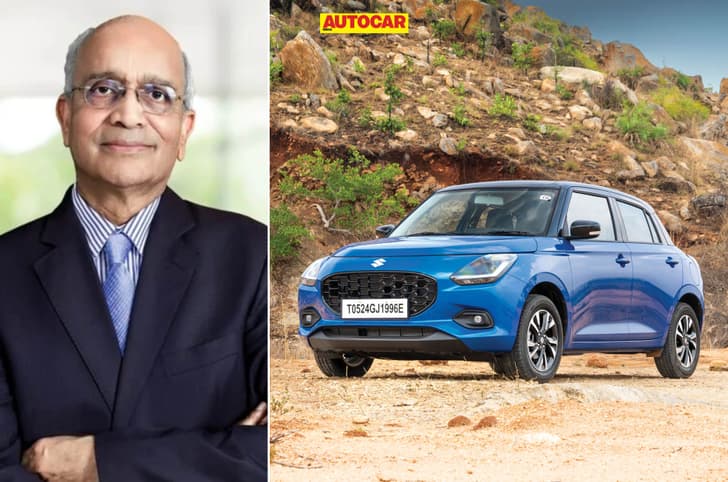

GST 2.0 slashed tax on small cars from 28% to 18%, pushing first-time buyers to 54% of Maruti's sales and lifting industry volumes 28% year-on-year in April–August 2026.
How Lower GST on Small Cars Is Bringing First-Time Buyers Back to India's Market in 2026
India's GST 2.0 reform — defined as the government's September 2025 rationalisation of the Goods and Services Tax that cut the rate on small passenger vehicles (under 4 metres in length) from 28% to 18% — has produced the sharpest surge in first-time car buyers since the pandemic. Maruti Suzuki, the country's largest carmaker, says first-time buyers accounted for 54% of its sales in April–August 2026, up from 42% a year earlier, a 12-percentage-point swing that industry executives are calling structurally significant. The overall passenger vehicle industry grew 28% year-on-year during April–August 2026, swinging from a 0.4% decline in the same period of FY26.
For a first-time buyer standing in a Maruti Arena or Nexa showroom today, the practical question is: which car benefits most from the new tax structure, and what does it actually cost? The table below compares the three models that have driven the hatchback revival — WagonR, Swift, and Baleno — alongside two rivals that compete directly for the same buyer pool.
| Model | Segment | GST Rate (2026) | Starting Ex-Showroom Price | ARAI Fuel Efficiency | First-Time Buyer Appeal | Key Weakness |
|---|---|---|---|---|---|---|
| Maruti WagonR (1.0L Petrol) | Tall-boy hatchback | 18% | ~₹5.54 lakh | 24.35 km/l (ARAI claim) | Highest practicality per rupee; 21,000 monthly registrations — a 5-year high | Dated interior design; no 6-airbag option on base variants |
| Maruti Swift (3rd-gen Petrol) | Premium hatchback | 18% | ~₹6.49 lakh | 24.80 km/l (ARAI claim) | Sporty styling driving strong youth demand; top-10 bestseller | Rear legroom tight for taller occupants; no diesel option currently |
| Maruti Baleno (Nexa, Petrol) | Premium hatchback | 18% | ~₹6.61 lakh | 22.35 km/l (ARAI claim) | Feature-rich cabin; HUD and 360-camera at segment-first pricing | Slightly higher price floor than WagonR/Swift; Nexa premium adds to on-road cost |
| Tata Tiago (Petrol/CNG) | Entry hatchback | 18% | ~₹5.60 lakh | 19.80 km/l petrol / 26.49 km/kg CNG (ARAI claims) | Strong CNG demand post-GST; facelift launched without discounts | Smaller boot; fewer feature options vs Baleno |
| Hyundai Grand i10 Nios (Petrol) | Entry hatchback | 18% | ~₹5.92 lakh | 20.7 km/l (ARAI claim) | Hyundai brand trust; discounts being trimmed as demand recovers | Less spacious than WagonR; fewer CNG variants |
Prices are indicative ex-showroom Delhi as of September 2026. ARAI figures are manufacturer claims; real-world efficiency is typically 15–25% lower depending on driving conditions.
What exactly is GST 2.0, and why does it matter for small car buyers?
GST 2.0 is the Indian government's September 2025 overhaul of the Goods and Services Tax structure for the automotive sector, the most significant tax rationalisation the industry had seen since GST's original rollout in 2017. The headline change for passenger vehicles: cars under 4 metres in length moved from the 28% slab to 18%, a 10-percentage-point reduction. Larger cars and SUVs also saw cuts of 3–7 percentage points, though they remain in a higher bracket.
To understand the magnitude, consider a car priced at ₹6 lakh (ex-factory). Under the old 28% regime, the GST component alone was ₹1.68 lakh. At 18%, it drops to ₹1.08 lakh — a saving of ₹60,000 on a single transaction. For a buyer financing the purchase over five years, that translates to a meaningful reduction in EMI. Hyundai MD Tarun Garg noted that this benefit was compounded by the Finance Bill's income-tax exemption of up to ₹12 lakh and a 100-basis-point reduction in the repo rate over the past year, all working together to improve affordability for first-time buyers.
The policy rationale was explicit: India's small-car segment had been in structural decline for years, with hatchbacks falling from roughly 46% of total passenger vehicle sales in FY19 to around 23% by FY26, according to Autocar India's analysis of the market. The sub-₹10 lakh segment's share of total sales had collapsed from 12.5% in FY24 to just 6% in FY26, per JATO Dynamics India data cited by Autocar India. GST 2.0 was the government's direct response.
How much has the market actually grown since the GST cut?
The numbers are striking. Overall sales of vehicles in the 18% GST bracket rose 29% to 1.24 million units during April–August 2026, compared to the year-earlier period. That category includes the Maruti Alto, WagonR, Tata Punch, and Mahindra Bolero, among others.
Maruti Suzuki's mini-car segment — Alto and S-Presso — saw sales surge 96% to 67,334 units during April–August 2026, though executives acknowledge this growth came off a low base. In the first two months of FY27 alone, Alto and S-Presso combined sold 32,341 units, a 146% jump, per ET reporting.
The WagonR's trajectory stands out. Maruti's Partho Banerjee cited 21,000 monthly registrations for the WagonR — a level not seen in five to six years — as evidence that the GST cut has genuinely revived organic demand rather than just pulling forward future purchases.
For broader context: the industry recorded growth of around 16% between September 2025 and March 2026, the immediate post-GST-cut period, before accelerating further into the new fiscal year. Hyundai's Tarun Garg noted that the 4-lakh-unit monthly wholesale mark has become "the new normal" for the industry since the GST reform, according to Autocar Professional's one-year GST 2.0 review.
Which Maruti models are benefiting most, and what are their real-world trade-offs?
Swift, Baleno, and WagonR have all made it to the list of top-selling cars in India in 2026 — a feat that would have seemed unlikely two years ago when the hatchback segment was in freefall. Each model occupies a distinct niche within the 18% GST bracket, and each has genuine weaknesses a buyer should weigh.
WagonR is the volume workhorse. Its tall-boy body maximises interior space for its footprint, making it genuinely practical for a family of four in urban conditions. The 1.0-litre and 1.2-litre petrol options give buyers flexibility, and the CNG variant (S-CNG) extends running-cost advantages further. The ARAI-claimed efficiency of 24.35 km/l for the 1.0L petrol is a manufacturer figure; real-world returns in city traffic typically land in the 16–19 km/l range. The weakness: the interior design has not kept pace with rivals, the infotainment system feels a generation behind Baleno's, and the base variants lack the six-airbag safety package that more safety-conscious buyers will want.
Swift is the emotional purchase in this trio. The third-generation model's styling has attracted younger buyers, and its ARAI-claimed 24.80 km/l efficiency (petrol, manufacturer claim) makes it one of the most fuel-efficient cars in its class on paper. Swift and Baleno together with WagonR are among the top-selling vehicles nationally in 2026. The honest caveat: rear legroom is noticeably tighter than the WagonR for taller passengers, and Maruti has not offered a diesel Swift in this generation, which some long-distance buyers will miss.
Baleno sits at the premium end of the Nexa range within this segment. It offers features — a heads-up display, 360-degree camera, and a larger touchscreen — that were unimaginable at this price point five years ago. The Nexa channel positioning also means a slightly more upmarket showroom experience. The trade-off is a higher price floor than WagonR or Swift, and the Nexa premium (on-road costs, accessories) can push the effective outlay meaningfully above the ex-showroom sticker. Its ARAI-claimed 22.35 km/l is lower than Swift or WagonR, though the difference in real-world driving is unlikely to be dramatic.
Maruti's dominance in this segment also means buyers have fewer differentiated choices within the Arena/Nexa space. If you want a small car with a diesel engine, a turbocharged petrol, or a more aggressive safety rating at the entry level, you may need to look at rivals.
How are rival brands — Tata, Hyundai, and Mahindra — responding to the GST-driven revival?
The first-time buyer surge is not a Maruti-only story. Tata Motors has seen the share of first-time buyers rise by 6–7% over the past year. Amit Kamat, chief commercial officer at Tata Motors Passenger Vehicles, noted that many such customers are choosing compact and sub-compact SUVs rather than hatchbacks. The Nexon and Punch together grew 60% after the GST cut, with both models ranking among the top three highest-selling vehicles in the country.
Tata's refreshed Tiago — launched in petrol, CNG, and EV variants — illustrates how the GST cut has changed the discount calculus. Before GST 2.0, carmakers were offering ₹19,000–₹26,000 in incentives on entry models to stimulate demand. By June 2026, Tata had withdrawn incentives on the Tiago and Punch entirely, and dealers reported that bookings had surged without any offers. The CNG variant is seeing the strongest demand, a reflection of running-cost sensitivity among first-time buyers.
Hyundai has similarly trimmed benefits on the Grand i10 Nios and Exter, pointing to a broader moderation in discounting across the entry-level market. When carmakers pull back discounts and demand holds — or grows — it typically signals genuine demand rather than incentive-driven volume, a healthier market dynamic.
Mahindra & Mahindra's story differs slightly. Its entry-level SUVs — the Bolero Neo and XUV 3XO — are technically in the 18% GST bracket (Bolero) or benefit from the broader cuts on compact SUVs. Mahindra's entry utility-vehicle wholesales rose 19.8% year-on-year to 106,699 units in April–August 2026, compared with just 4.7% growth in FY26. Nalinikanth Gollagunta, CEO of Mahindra's automotive division, confirmed a "strong bump-up in interest from first-time buyers" for these models.
Are SUVs still outpacing hatchbacks even with the GST cut?
Yes — and this is an important nuance that buyers and market-watchers should not overlook. Even with the hatchback revival, SUVs continue to outpace market growth and expand their share in overall car sales. Utility vehicles now account for around 68% of total passenger vehicle sales (55% SUVs and 13% MPVs), per Autocar India's market analysis.
Tata Motors' Kamat put it directly: "Since GST 2.0, the SUV segment has recorded the strongest growth, expanding by 67%, highlighting the continued shift in customer preference towards SUVs." Vehicles in the 40% tax bracket — which includes models like the Hyundai Creta and Kia Carens — grew about 21% year-on-year during April–August 2026. That is slower than the 29–30% growth in the 18% bracket, but it is growth from a much larger base.
The structural shift towards SUVs is not reversing — it is moderating. What GST 2.0 has done is arrest the collapse of the small-car segment and create a dual-track market where both hatchbacks and SUVs are growing simultaneously, rather than one cannibalising the other. For a first-time buyer, this is genuinely good news: the choice between a well-equipped hatchback and an entry SUV is now competitive on price, rather than the SUV being aspirationally out of reach.
What does Maruti Suzuki's chairman say about the long-term outlook for small cars?
Maruti Suzuki chairman RC Bhargava used unusually direct language at the company's annual results in April 2026. "In the last six years, the share of small cars has been declining. Now, with new GST rates, it is inevitable that what was lost will gradually come back," he said, pointing to improving affordability as the key driver.
Bhargava's argument rests on a demographic reality: "India is not a rich country where everybody can buy big cars… a large part of the population will need low-cost small cars." He cited 1,90,000 people on the waiting list for cars in India, with 30,000 of them specifically in the small-car segment — a figure that suggests latent demand rather than a market that has simply moved on.
Rahul Bharti, senior executive officer at Maruti Suzuki, framed it as a structural market-broadening event: "GST 2.0 has enabled the return of the first-time car buyers, broadening the base of the market. This gives fresh momentum to India's journey towards mass motorisation."
Maruti's strategy reflects this dual conviction. The company is investing in both small cars and SUVs simultaneously, and sees a significant opportunity in converting two-wheeler buyers into entry-level car customers — a segment that represents tens of millions of potential first-time buyers who currently cannot afford even the cheapest four-wheeler. Capacity expansion plans are aligned with this strategy.
The caveat Bhargava offered is worth noting: the recovery will be gradual, not a snap-back. Small-car volumes are still estimated to be 35–45% below pre-pandemic levels, and the structural shift in consumer preference towards SUVs means hatchbacks will not reclaim their FY19 share of 46% any time soon. But the direction of travel has changed.
How does the GST cut affect the actual buying decision — EMIs, running costs, and total ownership?
For a first-time buyer, the GST cut works through three channels simultaneously, and understanding each helps frame the purchase decision.
Purchase price reduction: The 10-percentage-point GST cut directly lowers the ex-showroom price of a small car. On a ₹6.5 lakh car, the saving is approximately ₹65,000. This is a one-time benefit that immediately improves affordability at the point of purchase.
EMI impact: A ₹65,000 reduction in the loan principal, financed over five years at a typical interest rate of 8.5–9%, reduces the monthly EMI by roughly ₹1,300–₹1,400. Combined with the repo rate reductions Hyundai's Garg referenced, the cumulative EMI relief for a first-time buyer financing a small car in 2026 versus 2024 is material.
Running costs: This is where the choice of fuel type matters most for first-time buyers, who are typically more sensitive to monthly outgoings than to upfront price. A WagonR CNG, for example, offers running costs significantly below its petrol equivalent — CNG at roughly ₹90–95/kg versus petrol at ₹100+/litre, with the CNG variant's ARAI-claimed 34.05 km/kg efficiency (manufacturer claim) making it one of the cheapest cars to run in India. For buyers considering hatchbacks with AMT transmissions for urban convenience, the WagonR and Tiago both offer AMT-CNG combinations that combine ease of driving with low running costs.
The Baleno and Swift, being petrol-only in their current iterations, have higher running costs than CNG alternatives but benefit from Maruti's wide service network — a genuine consideration for first-time buyers in smaller cities who may not have easy access to authorised service centres of newer brands.
For buyers considering automatic cars under ₹15 lakh, the GST cut has made AMT-equipped hatchbacks meaningfully more affordable, with the WagonR AMT and Swift AMT both now available at price points that were previously occupied by base-spec manual variants.
Is this revival sustainable, or is it a one-time demand pull-forward?
This is the question that analysts and industry executives are debating, and the honest answer is: probably both, in different proportions.
The demand pull-forward argument holds that some buyers who were planning to purchase in FY27 or FY28 accelerated their decision to take advantage of the GST cut — and that once this cohort is absorbed, growth will normalise. The industry's 28% growth in April–August 2026 coming off a low base (the industry had actually declined 0.4% in the same period of FY26) supports this reading.
The structural revival argument holds that the GST cut has permanently improved the affordability equation for small cars, bringing in buyers who would not have purchased at the old price points — the two-wheeler upgraders, the rural aspirants, the young urban professional who was stretching for a used car. The 12-percentage-point jump in first-time buyer share at Maruti, from 42% to 54%, is harder to explain purely as pull-forward; these are buyers entering the market for the first time, not repeat purchasers timing their upgrade.
The discount data provides a useful signal. Maruti cut the WagonR discount from ₹31,000 in May to ₹10,000 in June 2026, and Baleno discounts fell from ₹31,000 to ₹21,000 in the same period. Tata withdrew incentives on the Tiago and Punch entirely. When carmakers reduce discounts and demand holds — or grows — it suggests the underlying demand is real rather than incentive-driven.
The festive season outlook adds another data point. India's automobile industry is expected to grow by 10% for the full fiscal year, with automakers optimistic about the Navratri-Diwali period. If the festive season delivers strong volumes without a return to heavy discounting, the structural revival thesis will gain credibility.
What should a first-time buyer actually do with this information?
The practical implications of the GST 2.0 environment for a first-time buyer in late 2026 can be summarised as follows.
The price advantage of buying now versus two years ago is locked in — the 18% GST rate is the current structure, and there is no indication of further cuts. Maruti chairman Bhargava was explicit: "We are at 18% GST; I don't think there is a rate below that unless you get to 5%." So the urgency argument — buy before prices rise — does not apply in the same way it did immediately after the cut.
What does apply is the discount environment. Carmakers are actively trimming incentives as demand strengthens. A buyer who negotiated a ₹31,000 discount on a WagonR in May 2026 would get roughly ₹10,000 today. That gap may narrow further through the festive season if demand remains strong. Buyers who want to negotiate should act before the Navratri-Diwali peak.
For those weighing a hatchback against an entry SUV — a genuinely difficult choice in 2026 — the honest framing is this: the hatchback offers lower purchase price, lower insurance costs, easier urban manoeuvrability, and (in CNG variants) significantly lower running costs. The entry SUV offers higher ground clearance, more perceived status, and in some cases better safety ratings. The GST cut has made the hatchback more competitive on price, but it has not changed the fundamental character of either segment. Buyers who will spend most of their time in city traffic, parking in tight spaces, and watching fuel costs closely will find the WagonR, Swift, or Baleno hard to beat at their current price points.
For buyers specifically interested in automatic hatchbacks under ₹10 lakh, the GST cut has expanded the range of options meaningfully — AMT variants of the WagonR and Swift now sit at price points that were previously occupied by manual-only models, making the convenience of automatic transmission accessible to a wider first-time buyer pool.
The broader story is one of a market finding its equilibrium after years of distortion. Small cars became unaffordable relative to entry SUVs, first-time buyers stayed away, and the market narrowed. GST 2.0 has begun to reverse that dynamic — not by making small cars fashionable again, but by making them financially rational again. That is a more durable foundation for growth than any marketing campaign.
Sources
- Maruti Suzuki: First-Time Car Buyers Surge Back in India as Lower GST Fuels Small Vehicle Sales, ETAuto
- One Year of GST 2.0: Industry Sees Stronger Growth as Demand Reshapes, Autocar Professional
- Automakers Optimistic About Festive Demand, The Hindu
- Small Car Market Revival 'Inevitable', Says Maruti Chairman, Autocar India
- Carmakers Pare Discounts as GST Cut Revives Small-Car Demand, The Economic Times
- Maruti Suzuki WagonR Official Page
- Maruti Suzuki Swift Official Page
- Maruti Suzuki Baleno (Nexa) Official Page