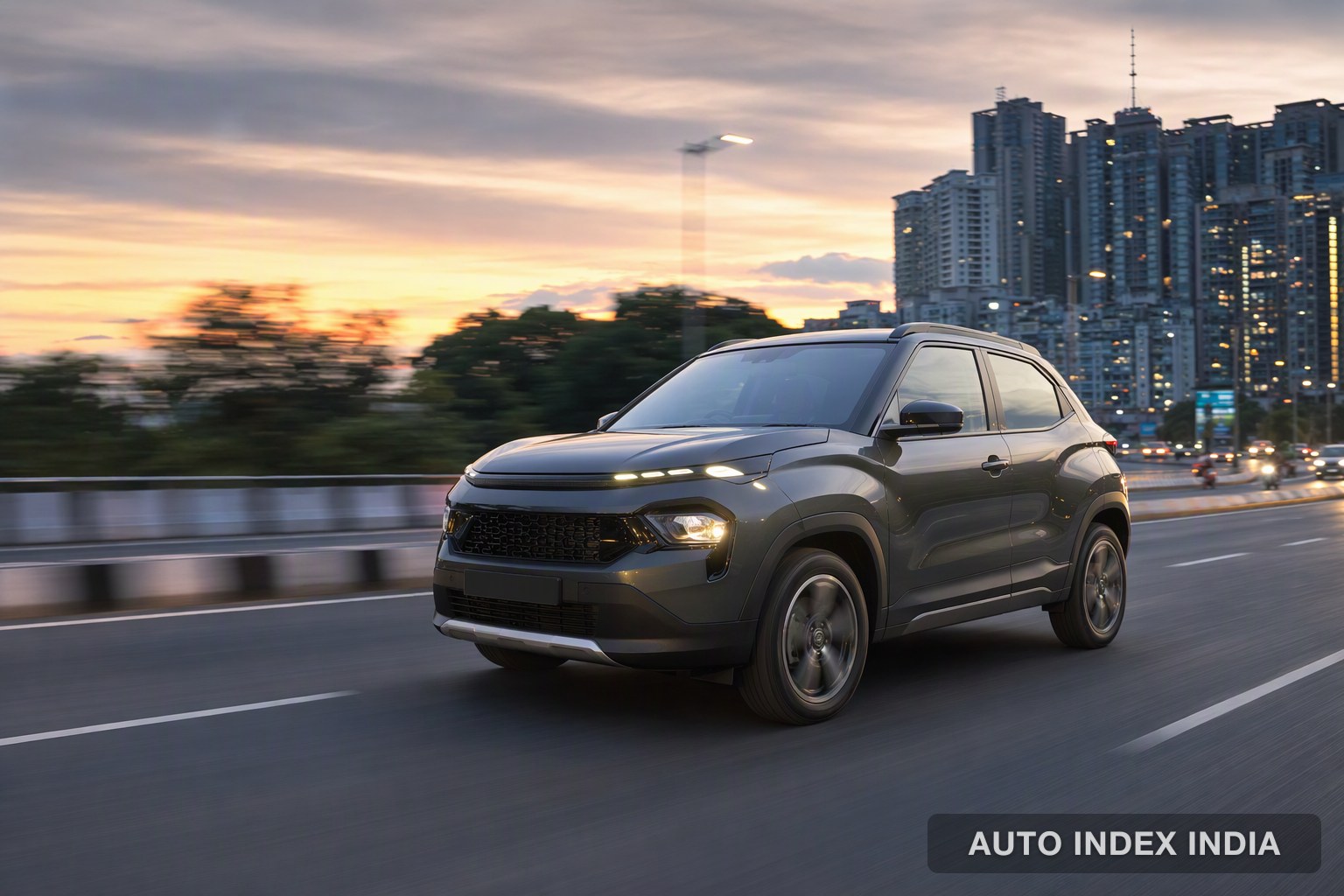
6 Best Turbo-Petrol Compact SUVs Under Rs 30 Lakh in India (2026)
A turbo does more than add power in this class. It is usually the gateway to a car's better gearbox and its higher trims, so the choice is rarely about output alone. Three of these six have a five-star crash result; two have none for the car sold in India.
Six compact SUVs in India pair a turbocharged petrol engine with a price tag under Rs 30 lakh, and the strongest of them makes 130 PS from 1.2 litres. Mahindra's XUV 3XO leads on outright output with its TGDi engine at 130 PS and 230 Nm, the Skoda Kushaq leads on engine technology with Active Cylinder Technology on its 1.5 TSI, and the Maruti Fronx is the only one here that bolts a mild-hybrid assist system onto its turbo. Three of the six carry a five-star crash result from either Bharat NCAP or Global NCAP. Two carry none at all for the car actually sold in India.
Forced induction changes a compact SUV in ways a bigger naturally aspirated engine does not. More torque arrives lower in the rev range, which is what you feel when pulling out to overtake. Turbo lag in traffic has largely gone from this generation of engines. And in almost every case on this list, the turbo engine is also the gateway to a car's better gearbox and its higher trims, which means the choice is rarely just about power.
Turbo-petrol compact SUVs under Rs 30 lakh at a glance
| Model | Price (turbo variants) | Engine | Power and torque | Transmission |
|---|---|---|---|---|
| Mahindra XUV 3XO | Rs 8.50 lakh to Rs 15.04 lakh | 1.2 MPFi turbo or 1.2 TGDi | 111.5 PS / 200 Nm or 130 PS / 230 Nm | 6-speed manual or 6-speed automatic |
| Skoda Kushaq | From Rs 10.69 lakh | 1.0 TSI or 1.5 TSI | 85 kW (115.56 PS) / 178 Nm, or about 150 PS / 250 Nm | 6-speed manual, 8-speed automatic or 7-speed DSG |
| Maruti Fronx | Rs 8.97 lakh to Rs 12.03 lakh | 1.0 Boosterjet turbo | 100.06 PS / 147.6 Nm | 5-speed manual or 6-speed automatic |
| Hyundai Venue N Line | From Rs 10,66,100 | 1.0 Turbo GDi Kappa | About 120 PS / 172 Nm | 6-speed manual or 7-speed DCT |
| Tata Nexon | Rs 9.30 lakh to Rs 14.52 lakh | 1.2 turbo Revotron | About 120 PS / 170 Nm | 6-speed manual, 6-speed AMT or 7-speed DCT |
| Kia Sonet | Rs 9.17 lakh to Rs 13.80 lakh | 1.0 T-GDi | 119.6 PS / 172 Nm | iMT or 7-speed DCT |
Prices are ex-showroom Delhi as on 30 September 2026 and change often. The Fronx figures come from Maruti's own NEXA price list and the Kushaq and Venue N Line starting prices from Skoda's and Hyundai's own India websites. Mahindra, Tata and Kia do not publish a single consolidated ex-showroom table for their turbo variants, so those ranges are drawn from dealer and aggregator listings and should be treated as indicative rather than official. Check with a dealer for your city.
What makes a turbo-petrol compact SUV
A turbocharger compresses intake air so a smaller engine can burn more fuel per cycle and make more power than its displacement suggests. That is how four of the six cars here get more out of engines of a litre or 1.2 litres than several rivals manage from 1.5 litres without a turbo.
Compact SUV here means the sub-4.3-metre class that the Sonet, Venue, Nexon, XUV 3XO, Fronx and Kushaq sit in, not the mid-size class of the Creta and Seltos. Every car listed is under Rs 30 lakh across its turbo-petrol variants specifically, which is a lower bar than it sounds: the dearest turbo variant on this list is under Rs 19 lakh.
1. Mahindra XUV 3XO
The XUV 3XO is the only car here that sells two distinctly different states of tune of the same turbo engine rather than one. The lower MPFi tune makes 111.5 PS and 200 Nm and is aimed at ordinary driving. The TGDi tune makes 130 PS and 230 Nm, which is the strongest turbo-petrol output in this comparison.
Both engines come with a choice of a 6-speed manual or a 6-speed automatic. Higher trims add a panoramic sunroof, a 10.25-inch touchscreen with connected car features and a Level 2 ADAS suite, and boot space is quoted at 364 litres.
On safety the XUV 3XO has the cleanest result on this list. Bharat NCAP awarded it five stars, with full marks in both adult and child occupant protection. Mahindra announced the same result alongside five-star ratings for the Thar Roxx and XUV400.
Where it falls short: the full 130 PS is reserved for the dearer automatic trims, so a buyer who actually wants that headline figure ends up spending near the top of the XUV 3XO range rather than the Rs 8.50 lakh entry price.
2. Skoda Kushaq
The Kushaq has the most interesting engineering here. Its 1.5 TSI runs Active Cylinder Technology, shutting down two of its four cylinders under light load and waking them when you ask for power, which is a way of getting efficiency without detuning the engine. Skoda pairs it with a 7-speed DSG and fits disc brakes on all four wheels on that version.
The volume engine is the 1.0 TSI at 85 kW, which works out to 115.56 PS, with 178 Nm. Skoda does not print the 1.5 TSI's output on its own India model page; it is widely listed at 150 PS and 250 Nm. Skoda now offers it with either a 6-speed manual or an 8-speed torque converter automatic, so the cheaper engine no longer means a manual-only choice. Cabin equipment runs to a 25.6 cm infotainment screen with wireless Android Auto and Apple CarPlay, ventilated front seats on upper trims and a 385-litre boot. Skoda's standard warranty is four years or 100,000 km.
Global NCAP rated the Kushaq five stars under its updated, tougher crash protocol, and the Kushaq and the VW Taigun were the first cars in India to manage it. That is a meaningfully harder test than the older protocol several rivals were rated under.
Where it falls short: the 1.5 TSI and its DSG live only on the Sportline, Prestige and Monte Carlo trims, so the most complete version of this car sits at the top of Skoda's price ladder.
3. Maruti Suzuki Fronx
The Fronx is the only turbo here with hybrid hardware attached. Maruti's brochure confirms that the 1.0 Boosterjet is the only Fronx engine that gets regenerative braking and electric torque assist during acceleration. The 1.2 litre gets idle start-stop and nothing else, so the Smart Hybrid label really only means something on the turbo.
The engine makes 73.6 kW, which Maruti states as 100.06 PS at 5,500 rpm, with 147.6 Nm from 2,000 to 4,500 rpm. Certified efficiency is 21.5 km/l with the 5-speed manual and 20.01 km/l with the 6-speed automatic, and the tank holds 37 litres. Boot space is 308 litres.
Be careful with the feature list. The head-up display, the 360-degree camera and cruise control are all Alpha-only on the Fronx, so a Zeta Turbo at about Rs 9.76 lakh has none of the three. There is no sunroof at any trim and no ADAS at any trim.
Safety needs stating plainly, because it is widely reported wrongly. No Bharat NCAP or Global NCAP result exists for the India-spec Fronx. Japan NCAP tested the made-in-India car sold in Japan and gave it four stars, scoring 163.75 out of 193.8 points. Australasian NCAP tested a Fronx and gave it one star. Those two results disagree sharply and neither is a Global NCAP India rating.
Where it falls short: the 6-speed automatic and every headline feature are locked to the Alpha grade, and the car carries no crash result for the version Indians actually buy.
4. Hyundai Venue N Line
The Venue N Line is sold as a separate performance-styled model rather than a trim of the Venue, and Hyundai lists it from Rs 10,66,100 on its own India site. The engine is the Kappa 1.0 Turbo GDi at roughly 120 PS and 172 Nm.
Hyundai offers two variants. The N6 comes with either a 6-speed manual or a 7-speed DCT. The N10 is DCT only and adds the fuller equipment list, including a 10.25-inch touchscreen and wireless smartphone mirroring. Boot space is 375 litres, and Hyundai's India warranty is three years with unlimited kilometres.
Bharat NCAP rated the Venue five stars, a result the N Line shares since it is the same structure.
Where it falls short: you cannot have the best-equipped Venue N Line and a manual gearbox in the same car, because the manual disappears when you move up to the N10.
5. Tata Nexon
The Nexon has been selling a turbo petrol longer than anything else here, and it has the longest-standing five-star Global NCAP result of any compact SUV in India.
The engine is the 1.2 litre three-cylinder turbo Revotron at roughly 120 PS and 170 Nm. That 170 Nm figure is worth holding on to, because the Nexon is frequently credited with 260 Nm. It is not a turbo-petrol figure. The 260 Nm belongs to the 1.5-litre diesel, which makes 115 PS and delivers its peak between 1,500 and 2,750 rpm. Confusing the two flatters the petrol by about 50 percent.
Gearbox choice is the widest on this list for a single engine: a 6-speed manual, a 6-speed AMT or a 7-speed DCT. Higher trims bring a voice-operated panoramic sunroof, a Harman system with wireless Android Auto and Apple CarPlay, a 360-degree camera and cruise control. Boot space is 382 litres and the warranty is three years or 100,000 km.
Where it falls short: three gearbox options sounds generous until you notice the AMT is the cheapest way into the automatic and the DCT is the only one that feels like a match for the engine.
6. Kia Sonet
The Sonet offers the most turbo trim and gearbox permutations here, running from an entry iMT up to an X-Line DCT. The engine is the 1.0 T-GDi at 119.6 PS and 172 Nm, with an iMT clutchless manual or a 7-speed DCT.
Equipment on upper trims includes ventilated front seats, a Bose sound system and a 10.25-inch touchscreen with Kia's connected car suite. Certified efficiency is quoted at 18.4 km/l and boot space at 385 litres.
Safety is the gap. There is no Bharat NCAP or Global NCAP result for the India-spec Sonet. Global NCAP tested a South Africa-built export Sonet and gave it one star, but that is a different build and specification from the Indian car and should not be read as an Indian rating in either direction.
Where it falls short: no crash result of its own, which is the single clear thing separating it from the XUV 3XO, the Kushaq and the Nexon.
Which one to buy
If outright turbo output is the point, the XUV 3XO TGDi at 130 PS and 230 Nm has no rival on this list, as long as you accept that the figure lives in the dearer automatic trims.
If you want a verified crash result above all else, the field narrows to three cars. The Kushaq's five stars came under Global NCAP's updated protocol, which is the toughest of the three tests involved. The XUV 3XO's five stars came from Bharat NCAP with full marks in both categories. The Nexon's five stars have stood the longest.
If efficiency matters as much as performance, the Fronx turbo at 21.5 km/l certified is the most efficient turbo here, and the Kushaq's cylinder deactivation is the cleverest attempt at the same problem. Neither is a small gain: a turbo engine that returns better than 20 km/l on the certification cycle undercuts the usual argument for buying the naturally aspirated version instead.
And if you simply want the widest choice of ways to buy the same engine, the Sonet has more trim and gearbox combinations than anything else here, at the cost of having no crash rating to point at.
Frequently asked questions
Which turbo-petrol compact SUV under Rs 30 lakh has the most powerful engine?
The Mahindra XUV 3XO with its 1.2 TGDi turbo, at 130 PS and 230 Nm.
Which of these has the best confirmed crash-test rating?
Three cars have five stars. The XUV 3XO and the Venue N Line hold five-star Bharat NCAP ratings. The Nexon and the Kushaq hold five-star Global NCAP ratings, and the Kushaq's was awarded under the updated, more stringent protocol.
Which ones have no confirmed Indian crash rating?
The Maruti Fronx and the Kia Sonet. Both have results from other markets, the Fronx from Japan NCAP and Australasian NCAP and the Sonet from a Global NCAP test of a South African build, but none of those apply to the India-spec car.
Does the Tata Nexon turbo petrol make 260 Nm?
No. The petrol turbo makes 170 Nm. The 260 Nm figure belongs to the 1.5-litre diesel, which makes 115 PS.
Does a turbo petrol always use more fuel than a naturally aspirated engine?
Not in this class. The Fronx turbo is certified at 21.5 km/l with the manual, helped by its mild-hybrid regenerative braking and torque assist, and the Kushaq's 1.5 TSI shuts down half its cylinders under light load for the same reason. Both are deliberate attempts to stop forced induction costing you efficiency.
Last verified: 2026-09-30
Sources
- Maruti Fronx brochure: NEXA
- Maruti Fronx prices: NEXA
- Skoda Kushaq: Skoda Auto India
- Hyundai Venue N Line prices: Hyundai India
- Tata Nexon: Tata Motors
- Kia Sonet specifications: Kia India
- Mahindra XUV 3XO 5-star Bharat NCAP: Mahindra
- Bharat NCAP results
- Global NCAP India results
- Kushaq and Taigun first to 5 stars on the updated Global NCAP protocol
- Made-in-India Fronx awarded 4 stars by Japan NCAP