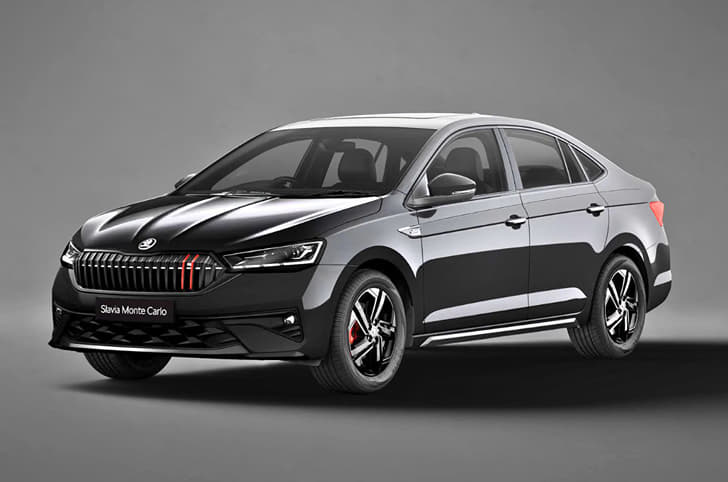

Skoda Slavia facelift launches October 6, 2026, priced ₹10–20 lakh ex-showroom, with a new 8-speed torque-converter auto on the 1.0 TSI and updated cabin tech including a 10.25-inch digital cluster and rear-seat massager.
Skoda Slavia Facelift Launches October 6, 2026: Price, 8-Speed Auto & How It Compares to Maruti Baleno in India
The Skoda Slavia facelift marks the first full update to Skoda's MQB-A0-IN platform midsize sedan since its original launch over four years ago. It goes on sale October 6, 2026, with prices expected between ₹10 lakh and ₹20 lakh (ex-showroom). Production has already commenced at Skoda Auto Volkswagen India's Chakan plant in Pune, and pre-bookings are open at ₹15,000, with deliveries timed for the festive season.
The most significant mechanical change is the replacement of the old 6-speed automatic with a new 8-speed torque-converter automatic on the 115hp 1.0-litre TSI engine — a meaningful step up in refinement and shift quality for buyers who prioritise a smooth automatic experience. The current outgoing Slavia is priced from ₹9.99 lakh to ₹18.29 lakh ex-showroom, and a price hike of up to ₹85,000 is anticipated with the facelift.
Before diving deeper into what's changed, here's how the Slavia facelift stacks up against its primary rivals — and against the Maruti Baleno, which is the benchmark petrol-automatic car that many buyers in the ₹10–12 lakh bracket consider before stepping up to a sedan.
| Model | Engine & Power | Automatic Gearbox Type | Price Range (Ex-Showroom) | Key Automatic Differentiator |
|---|---|---|---|---|
| Skoda Slavia Facelift (1.0 TSI AT) | 1.0L Turbo-Petrol, 115hp / 178Nm | 8-speed Torque Converter | ~₹10–12 lakh (expected) | New 8-speed TC auto; replaces 6-speed unit |
| Maruti Baleno (1.2 Petrol CVT) | 1.2L NA Petrol, 90hp / 113Nm | CVT | ₹6.61–₹9.88 lakh | Smooth CVT; lower price entry; no turbo punch |
| Hyundai Verna (1.5 Petrol IVT) | 1.5L NA Petrol, 115hp / 144Nm | IVT (CVT-type) | ₹10.99–₹18.31 lakh | Segment-leading features; ADAS available |
| Honda City (1.5 Petrol CVT) | 1.5L NA Petrol, 121hp / 145Nm | CVT | ₹11.99–₹21.44 lakh | Refined CVT; strong resale; e:HEV hybrid option |
| Volkswagen Virtus (1.0 TSI AT) | 1.0L Turbo-Petrol, 115hp / 178Nm | 6-speed Torque Converter | ₹10.79–₹19.19 lakh | Same TSI engine as Slavia; older 6-speed auto |
All prices ex-showroom, India. Slavia facelift price is expected/pre-launch estimate per Autocar India.
The table makes one thing immediately clear: the Slavia facelift's 8-speed torque-converter is a genuine step ahead of the Virtus (which shares the same 1.0 TSI engine but retains a 6-speed auto), and it offers turbo-petrol punch that neither the Baleno's CVT nor the City's CVT can match at equivalent price points.
What exactly has changed in the 2026 Slavia facelift?
The 2026 Slavia facelift is a mid-cycle refresh that touches the exterior, interior technology, and powertrain calibration — without altering the fundamental MQB-A0-IN platform or body dimensions.
Exterior: The headlamps and tail-lamps have been revised, bumpers restyled, and the alloy wheels redesigned to a sportier 16-inch pattern. Sequential turn indicators now feature on the tail-lamps, and a new trim strip between them carries the 'SKODA' lettering in full — a detail borrowed from newer European Skoda models. Two new paint options arrive: Arctic Silver and Cappuccino Beige. The Monte Carlo trim launches from day one, a variant absent from the original lineup.
Interior: Dashboard layout remains unchanged, but both screens have grown. The infotainment unit expands from 10 inches to 10.1 inches with updated graphics, while the driver's display jumps from 8 inches to a much more substantial 10.25-inch digital instrument cluster. Wireless Apple CarPlay and Android Auto are standard on the updated system.
Feature additions include a 360-degree camera (replacing the outgoing model's rearview-only camera), powered and ventilated front seats, and — notably — a rear-seat massage function borrowed from the Kushaq SUV. A panoramic sunroof remains absent; the Slavia continues with a single-pane unit, which is a limitation compared to rivals like the Verna that offer a larger sunroof experience.
The AC system has been upgraded from a fixed-geometry compressor to a variable-geometry unit, which should translate to faster cabin cooling and better efficiency — a practical upgrade for Indian summer conditions.
ADAS (Advanced Driver Assistance Systems) remains unavailable on the Slavia facelift, a notable gap when the Hyundai Verna offers lane-keep assist, autonomous emergency braking and adaptive cruise control in its higher variants.
Why does the 8-speed automatic matter — and how does it compare to rivals' gearboxes?
The shift from a 6-speed torque-converter automatic to an 8-speed torque-converter on the 1.0 TSI is the most substantive mechanical upgrade in this facelift. More ratios mean the engine can stay closer to its power band at all speeds, which typically results in better fuel efficiency at highway speeds, smoother gear changes, and less hunting between gears in city traffic.
The Volkswagen Virtus — which shares the identical 115hp/178Nm 1.0 TSI engine — still uses a 6-speed torque-converter automatic, priced from ₹10.79 lakh. The Slavia facelift therefore has a direct gearbox advantage over its corporate sibling at what is expected to be a comparable price point.
The Maruti Baleno's CVT operates differently. Its 1.2-litre naturally aspirated petrol engine produces 90hp and 113Nm, paired with a CVT that delivers smooth, rubberband-smooth acceleration. CVTs excel for urban commuting and are generally low on maintenance. However, the Baleno's NA engine lacks the turbo torque that makes the Slavia's 1.0 TSI feel punchy from low revs — the Slavia produces 178Nm versus the Baleno's 113Nm, a 57% torque advantage. The trade-off is that the Slavia sits in a higher price bracket and is a larger, heavier car.
For buyers specifically shopping in the ₹10–12 lakh automatic segment, the Slavia facelift's 8-speed auto is compelling — particularly if they want the feel of a proper stepped-ratio gearbox rather than a CVT. Our guide to the best automatic cars under ₹15 lakh in India covers the full space.
The Honda City's 1.5-litre CVT is smooth and refined but naturally aspirated, producing 121hp and 145Nm — more power than the Baleno, but still short of the Slavia's torque figure. The Hyundai Verna's IVT (Intelligent Variable Transmission, essentially a CVT) on the 1.5-litre NA petrol is similarly smooth but lacks the step-off punch of a turbocharged engine.
What are the Slavia facelift's expected prices, and how do they compare to the current model?
The outgoing Skoda Slavia ranges from ₹9.99 lakh to ₹18.29 lakh (ex-showroom). Autocar India reports that a price hike of up to ₹85,000 is likely with the facelift, putting the entry point at approximately ₹10.84 lakh and the top-end 1.5 TSI DSG variant at around ₹19.14 lakh — though official prices will only be confirmed at the October 6 launch event.
The expected price range of ₹10 lakh to ₹20 lakh (ex-showroom) breaks down roughly as:
- Entry 1.0 TSI MT (Classic): ~₹10.84 lakh (expected)
- 1.0 TSI AT (Classic Plus AT): ~₹12–13 lakh (expected)
- 1.5 TSI DSG (top variants): ~₹17–19 lakh (expected)
Against the Honda City (₹11.99–₹21.44 lakh) and Hyundai Verna (₹10.99–₹18.31 lakh), the Slavia facelift is broadly competitive. The Volkswagen Virtus at ₹10.79–₹19.19 lakh is the closest structural competitor, and the Slavia's 8-speed auto gives it a technical edge over the Virtus at the automatic variants.
Buyers considering the Maruti Baleno as a budget-conscious alternative should note that the Baleno tops out at around ₹9.88 lakh (ex-showroom) for its CVT automatic variant — meaning there is a meaningful price gap between the Baleno's ceiling and the Slavia's floor. The Baleno is a premium hatchback; the Slavia is a midsize sedan. They serve overlapping but distinct buyer profiles.
How does the Slavia facelift compare to the Maruti Baleno for automatic-transmission buyers?
This is the comparison that matters most for buyers in the ₹10–12 lakh petrol-automatic bracket deciding between a premium hatchback and a midsize sedan.
The Maruti Baleno with CVT automatic is priced from approximately ₹8.66 lakh to ₹9.88 lakh (ex-showroom), making it ₹2–3 lakh cheaper than where the Slavia facelift's automatic variants are expected to land. That price gap is real and significant.
Where the Baleno wins:
- Lower purchase price and lower on-road cost
- Better ARAI-claimed fuel efficiency (the Baleno CVT claims around 22.35 km/l, a manufacturer ARAI figure, versus the Slavia 1.0 TSI AT's ARAI claim of approximately 18.7 km/l — though real-world figures for both will be lower)
- Maruti's unmatched service network across India — particularly relevant in Tier 2 and Tier 3 cities
- Lower insurance and maintenance costs
- Lighter, more manoeuvrable in tight city traffic
Where the Slavia facelift wins:
- Significantly more torque (178Nm vs 113Nm) for confident highway overtaking
- Larger cabin with genuinely more rear legroom — the Slavia is a proper sedan with a 521-litre boot
- 8-speed torque-converter auto versus CVT — more engaging to drive, better at simulating a traditional gearbox feel
- Premium features: 360-degree camera, rear-seat massager, ventilated front seats, 10.25-inch digital cluster
- Stronger road presence as a three-box sedan
The Baleno's honest weaknesses in this context: The Baleno's 90hp NA engine feels strained on highways at sustained speeds above 100 km/h. The CVT's rubber-band effect under hard acceleration is a common complaint. Boot space at 318 litres is considerably smaller than the Slavia's. While the Baleno's cabin is well-appointed for a hatchback, it does not offer rear-seat ventilation, massage, or a 360-degree camera.
The Slavia facelift's honest weaknesses: No ADAS, no panoramic sunroof (a single-pane unit only), and the 1.0 TSI engine — while punchy — is a three-cylinder unit that can feel less refined than the four-cylinder engines in the City and Verna at idle. Skoda's service network, while improved, still does not match Maruti's reach. The expected price premium over the Baleno means buyers need to genuinely value the sedan body style and turbo performance to justify the step up.
If you're evaluating hatchback automatics more broadly, our guide to the best automatic hatchbacks under ₹10 lakh is worth reading before making the final call.
What are the Slavia facelift's engines and gearbox options in full?
The 2026 Slavia facelift carries forward two direct-injection turbo-petrol engines:
1.0-litre TSI (three-cylinder):
- Output: 115hp / 178Nm
- Gearbox options: 6-speed manual OR new 8-speed torque-converter automatic
- This is the volume engine and the one most relevant to the ₹10–13 lakh buyer
1.5-litre TSI (four-cylinder, with cylinder deactivation):
- Output: 150hp / 250Nm
- Gearbox: 7-speed DSG (dual-clutch automatic) only
- This is the performance-oriented choice, competing with the Verna's 1.5 turbo-petrol and the City's e:HEV hybrid at the top end
The 1.5 TSI's cylinder deactivation technology shuts down two cylinders under light load, which helps real-world fuel efficiency. The ARAI-claimed mileage for the 1.5 TSI DSG on the outgoing model was approximately 18.4 km/l (manufacturer ARAI claim) — the facelift figure is yet to be officially declared.
Neither engine is diesel. The Slavia has never offered a diesel option in India, which means buyers who prioritise diesel efficiency for long highway runs will need to look at the Hyundai Verna diesel (1.5 CRDi, 115hp) or the Honda City diesel (1.5 iDTEC, 100hp) instead.
What features does the Slavia facelift add over the current model?
Here is a clear accounting of what's new versus what carries over:
New additions:
- 10.25-inch digital driver's display (up from 8 inches)
- 10.1-inch infotainment touchscreen (up from 10 inches) with updated graphics
- 360-degree camera system (replaces rear-only camera)
- Rear-seat massage function (first seen on Kushaq)
- Variable-geometry AC compressor for improved cooling
- Sequential rear turn indicators
- New 'SKODA' lettering trim strip between tail-lamps
- Monte Carlo sporty trim from launch
- New colours: Arctic Silver, Cappuccino Beige
- 8-speed torque-converter automatic (on 1.0 TSI, replacing 6-speed)
Carried over:
- Single-pane sunroof (no panoramic upgrade)
- Powered and ventilated front seats (already on outgoing top variants)
- Wireless Apple CarPlay and Android Auto
- 521-litre boot
- MQB-A0-IN platform and overall body dimensions
- No ADAS suite
The absence of ADAS deserves emphasis. The Hyundai Verna offers six airbags plus ADAS features including forward collision warning, lane departure warning and high-beam assist on its higher variants. The Slavia facelift has six airbags but no ADAS — a gap that safety-conscious buyers will notice.
Who should buy the Slavia facelift, and who should look elsewhere?
Buy the Slavia facelift if:
- You want a proper three-box sedan with a large boot (521 litres) and genuine rear legroom
- The 8-speed torque-converter automatic appeals over a CVT for its driving feel
- You value turbo-petrol performance (178Nm from the 1.0 TSI) for highway driving
- The Monte Carlo trim's sporty styling appeals
- You're stepping up from a hatchback and want a meaningful upgrade in road presence and cabin space
Consider alternatives if:
- ADAS safety features are a priority — the Hyundai Verna is the better choice here
- You want a panoramic sunroof — the Verna and City both offer this
- Budget is tight around ₹9–10 lakh — the Maruti Baleno CVT delivers excellent value and Maruti's service network is unmatched
- You prefer a four-cylinder engine for refinement — the Honda City's 1.5-litre i-VTEC is smoother at idle than the Slavia's three-cylinder 1.0 TSI
- Diesel efficiency matters — neither the Slavia nor the Virtus offers diesel in India
The Volkswagen Virtus deserves a special mention. It shares the Slavia's 1.0 TSI and 1.5 TSI engines and the MQB-A0-IN platform, but retains the older 6-speed automatic. If Virtus pricing stays below Slavia facelift pricing after October 6, the Slavia's 8-speed auto becomes its clearest differentiator over its corporate sibling.
When does the Slavia facelift launch, and what are the booking details?
Production of the 2026 Slavia facelift commenced at Skoda Auto Volkswagen India's Chakan, Pune facility in late September 2026. The official launch and price announcement is confirmed for October 6, 2026, timed to coincide with the festive season — traditionally the strongest period for car sales in India.
Pre-bookings are open at ₹15,000 at Skoda dealerships and online. Deliveries are expected to begin shortly after the launch date, during the Navratri-Dussehra festive window.
Fortune India reports that Skoda is simultaneously opening pre-bookings for a limited batch of 50 Octavia RS cars, and expressions of interest have opened for the Superb TDI (diesel), with deliveries of the Superb expected by end of Q2 2027. This signals Skoda's broader commitment to sedans in an SUV-dominated Indian market — a contrarian but deliberate strategy.
How does the Slavia facelift fit into the midsize sedan segment's competitive space?
The midsize sedan segment in India spans cars positioned between premium hatchbacks (like the Baleno and Altroz) and compact SUVs (like the Fronx and Nexon), typically priced from ₹10 lakh to ₹22 lakh ex-showroom, offering three-box body styles with boots of 450 litres or more.
The segment has been under pressure from compact SUVs for several years, with buyers increasingly preferring the higher seating position and perceived road presence of SUVs. Yet sedans retain a loyal following among buyers who prioritise highway stability, fuel efficiency at speed, and a quieter cabin — all areas where a well-tuned sedan typically outperforms a similarly priced compact SUV.
The Slavia facelift enters this context as the most comprehensively updated sedan in the segment since the Verna's last refresh. The Honda City — long the segment benchmark — has not received a major update in India recently, which gives the Slavia an opportunity to close the gap on features.
The Hyundai Verna remains the segment leader on features and ADAS, but the Slavia facelift's 8-speed automatic, rear-seat massager, and 360-degree camera bring it closer to parity on the comfort and convenience front.
For buyers also weighing hatchback options with automatic gearboxes, our AMT hatchback guide covers that space separately — the Slavia facelift is a step up in both size and price from those options.
Summary: Is the Slavia facelift worth waiting for?
The 2026 Skoda Slavia facelift is a meaningful update rather than a cosmetic refresh. The 8-speed torque-converter automatic is a genuine improvement over the outgoing 6-speed unit and gives the Slavia a gearbox advantage over the Virtus. The interior upgrades — larger digital cluster, 360-degree camera, rear massager — address real gaps in the outgoing car's feature list.
The weaknesses are equally real: no ADAS, no panoramic sunroof, a three-cylinder engine that some buyers find less refined than four-cylinder alternatives, and a service network that still trails Maruti's reach. The expected price hike of up to ₹85,000 over the current model means the Slavia facelift will need to justify its premium on the day prices are announced.
For automatic-transmission buyers in the ₹10–13 lakh bracket choosing between the Maruti Baleno CVT and a midsize sedan, the Slavia facelift makes the clearest case yet for stepping up — provided the on-road price difference is acceptable. The Baleno remains the smarter buy for pure value, service accessibility, and fuel economy. The Slavia facelift is the better drive.
Official prices on October 6 will determine whether Skoda has priced this update competitively enough to convert fence-sitters.